In today’s digital age, managing your team’s content and digital assets effectively is vital for ensuring smooth operations and efficient workflows. Whether it’s photos, videos, marketing content, or internal documents, keeping these assets organized and easily accessible can make all the difference in a marketing or content team’s productivity. To achieve this, Digital Asset Management (DAM) tools play a critical role.
As businesses scale, the question arises: should you opt for an open-source DAM solution or a paid, commercial option? Both come with their own advantages and limitations. In this post, we’ll explore the key differences between open-source and paid DAM tools, and help you determine which option best fits the needs of your team.
What Are DAM Tools?
Digital Asset Management (DAM) tools are software solutions designed to store, organize, manage, and distribute digital content. These tools ensure that everything from images to videos, documents, and other digital files are stored securely and are easy to find when needed. DAM solutions also streamline workflows, enhance team collaboration, and ensure that digital assets are used efficiently.
With an increasing volume of content, effective DAM software becomes essential. However, the decision between using an open-source DAM tool or opting for a paid solution can be a challenge. Let’s break down the pros and cons of each to help you decide which is the best fit for your team.
Open-Source DAM Tools: Advantages and Challenges
Open-source DAM tools are free to use, and their source code is available for modification. This means your team has the freedom to customize the tool based on its specific needs. Let’s take a look at the benefits and limitations of using an open-source DAM solution.
Advantages of Open-Source DAM Tools
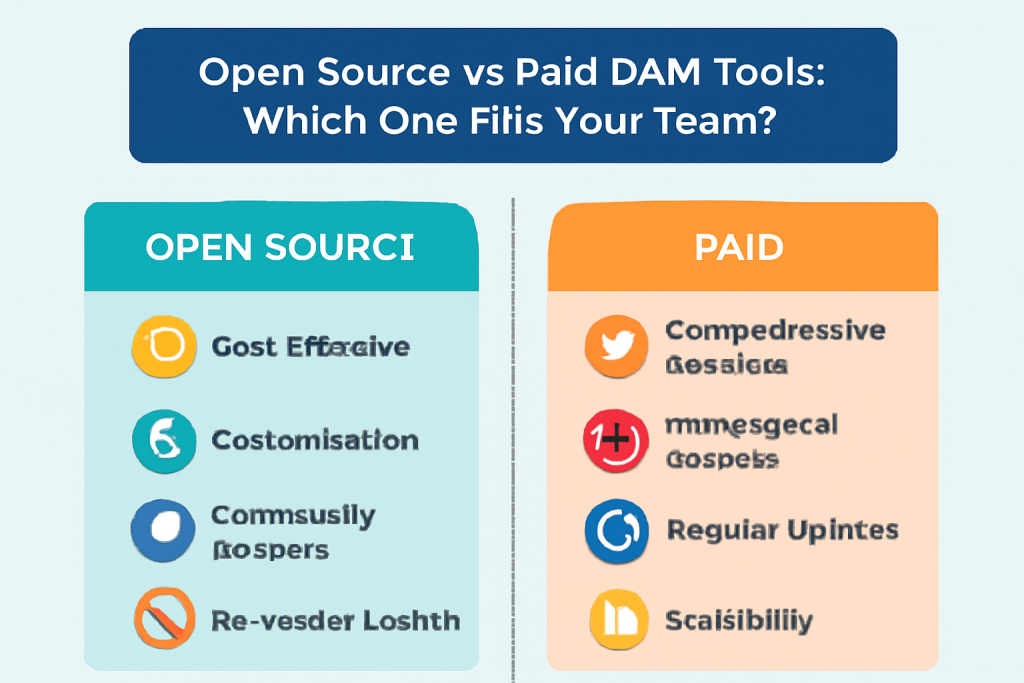
- Cost-Effective Solution:
Open-source DAM tools are free to use, which makes them an attractive option for startups and small businesses with limited budgets. You won’t need to worry about subscription fees or licensing costs, making it a great choice for those looking to save on initial software expenses. - Customizability:
Since open-source DAM solutions allow access to the underlying source code, businesses can tailor the software to meet their specific needs. If your team has in-house developers, they can modify the software to integrate with other tools or add additional features based on unique requirements. - Community Support:
Open-source tools often have vibrant communities of users and developers who share solutions and troubleshooting advice. Forums, user groups, and online documentation can provide valuable insights when facing issues or when exploring additional features.
Challenges of Open-Source DAM Tools
- Limited Advanced Features:
While open-source DAM tools are cost-effective, they often lack some advanced features found in paid solutions. You may miss out on functionalities such as automated metadata tagging, AI-powered search, and integration with other enterprise-level software. - Technical Expertise Required:
Customization and maintenance of open-source tools require technical knowledge. Without a dedicated in-house development team, businesses may struggle with setup, maintenance, and troubleshooting. This can result in additional costs if external developers need to be hired. - Support Limitations:
While community support can be helpful, it may not always be reliable. Professional support is often unavailable, and resolving complex issues might take longer compared to paid DAM tools that offer dedicated customer service.
Paid DAM Tools: Benefits and Drawbacks
Paid DAM tools are subscription-based or come with a one-time license fee. These solutions are generally feature-rich and offer additional functionalities not found in many open-source tools. Let’s explore the advantages and potential downsides of choosing a paid DAM solution.
Advantages of Paid DAM Tools
- Comprehensive Feature Set:
Paid DAM tools offer a wide range of advanced features like AI-enhanced search capabilities, automated tagging, customizable metadata, and integration with other business systems (CRM, marketing platforms, etc.). These features can save time, increase accuracy, and streamline workflows. - Customer Support:
One of the biggest advantages of paid DAM tools is access to professional, around-the-clock customer support. Whether you need assistance with setup, troubleshooting, or system upgrades, paid tools usually come with dedicated support teams to address issues promptly. - Scalability and Reliability:
Paid DAM tools are designed to scale with your business. Whether you’re a small business or a large enterprise, paid tools offer the infrastructure needed to handle growing amounts of digital assets and users. They are built with high uptime reliability, ensuring your team can always access the content they need.
Challenges of Paid DAM Tools
- Cost Considerations:
While paid DAM tools offer advanced features, they come at a cost. Subscription fees or one-time licensing charges can be expensive for smaller teams or businesses operating on a tight budget. Over time, the total cost of ownership could become a consideration. - Less Flexibility in Customization:
Unlike open-source DAM tools, paid solutions may not allow the same level of customization. While most tools offer configurable settings and integrations, you may not be able to make deep code-level changes without incurring additional costs for custom development. - Learning Curve:
Due to the extensive features of paid DAM tools, there may be a steeper learning curve. Teams may need additional training to get the most out of the software, which can require time and resources.
Why Choose Wizbrand for Your DAM Needs?
When considering a paid DAM tool, Wizbrand is a leading solution worth exploring. Designed to streamline digital workflows, Wizbrand offers a comprehensive suite of tools to manage and distribute your digital assets. Whether you’re handling marketing content, customer assets, or internal documents, Wizbrand’s platform is equipped with robust features that help your team stay organized, collaborate seamlessly, and access digital content in real-time.

Wizbrand’s SEO Management Software further boosts your digital asset management by integrating tools that optimize content for search engines, making your digital assets more accessible and discoverable. From AI-based search functionalities to customizable metadata and secure storage options, Wizbrand ensures that your team can manage, share, and optimize content effortlessly.
Moreover, Wizbrand’s ability to scale ensures that as your business grows, so too will your DAM solution. Whether you’re a small team or a large enterprise, Wizbrand is tailored to meet the demands of any organization, providing the tools and support you need to succeed.
Conclusion: Which DAM Tool is Right for Your Team?
Choosing between open-source and paid DAM tools ultimately depends on your team’s size, technical capabilities, and budget. Open-source DAM tools are ideal for smaller teams with technical expertise and limited budgets, offering flexibility and cost savings. However, they may lack advanced features and professional support.
On the other hand, paid DAM solutions like Wizbrand provide a comprehensive, feature-rich platform with customer support, scalability, and advanced functionalities. If your team requires a secure, easy-to-use DAM tool with robust features, Wizbrand is a great choice for managing digital content.
Explore Wizbrand today and see how it can streamline your digital asset management processes, boost team collaboration, and optimize your content for maximum impact.