Introduction
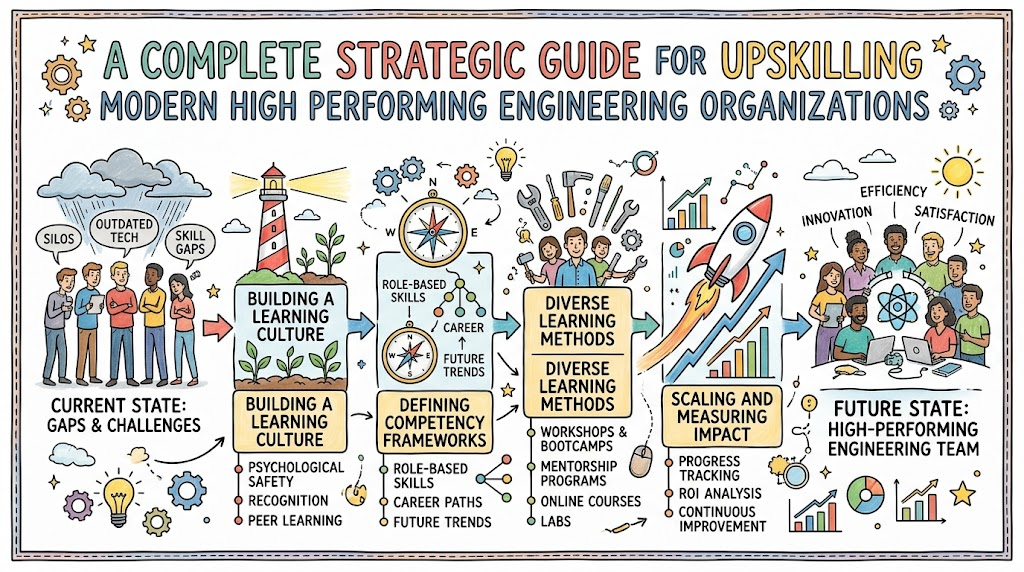
Building high-velocity engineering organizations requires technology leaders to continuously modernize deployment pipelines and team competencies. Therefore, forward-thinking enterprises invest heavily in structured practitioner-led mentorship programs to maintain operational excellence across cloud environments.
Engaging an experienced DevOps Trainer allows engineering teams to identify delivery bottlenecks, eliminate manual configuration errors, and master automated release workflows. When battle-tested practitioners guide developers through complex infrastructure scenarios, product release cycles accelerate dramatically.
Additionally, targeted upskilling initiatives eliminate critical knowledge gaps across cross-functional engineering pods. Empowering software engineers with hands-on technical guidance converts traditional IT departments into agile drivers of digital growth.
What Does a DevOps Trainer Do?
An expert practitioner evaluates organizational pipeline architectures, identifies workflow friction, and designs customized learning trajectories for engineering cohorts. Consequently, they bridge operational gaps between software developers, system administrators, and security specialists.
+-----------------------------------------------------------------------+
|                    MENTORSHIP ENGAGEMENT FRAMEWORK                    |
+-----------------------------------------------------------------------+
| Phase 1: Audit       | Assess tools, workflows, and team baselines.   |
| Phase 2: Design      | Construct company-specific automation paths.  |
| Phase 3: Execution   | Direct live interactive troubleshooting labs.  |
| Phase 4: Guidance    | Guide engineers during active release cycles.  |
+-----------------------------------------------------------------------+
Rather than presenting static theoretical lectures, these mentors build realistic staging environments where developers practice automated infrastructure management directly. As a result, engineers develop immediate operational confidence without endangering live customer production environments.
In addition, an effective instructor establishes consistent continuous integration standards across multi-functional product teams. Implementing uniform operational guidelines helps enterprise organizations reduce software release failures and optimize deployment velocity.
Why Practical DevOps Learning Matters
Reading technical documentation rarely prepares software engineers for complex production outages or cascading infrastructure failures. For instance, understanding container architecture theoretically differs significantly from resolving active cluster networking issues during peak traffic events.
Therefore, hands-on sandbox exercises allow developers to test deployment scripts, failover routines, and rollback procedures safely. Consequently, practical muscle memory builds durable operational skills that minimize downtime during live production releases.
- Rapid Skill Acquisition: Engineers master complex cloud toolchains inside isolated sandbox setups.
- Operational Risk Reduction: Teams practice disaster recovery without exposing live systems to unexpected outages.
- Standardized Workflows: Organizations deploy uniform Infrastructure as Code practices across all software units.
Furthermore, direct practical exercises strengthen developer confidence when adopting complex cloud-native architectures. When team members master continuous delivery pipelines, they spend less time firefighting and more time delivering core features.
What Should You Look for in a DevOps Trainer?
Selecting the right technical mentor dictates whether your organization successfully modernizes its software delivery workflows. Consequently, engineering directors must evaluate technical mastery alongside proven enterprise implementation experience.
| Evaluation Area | Essential Capability | Operational Advantage |
| Field Experience | Active background managing enterprise cloud systems | Ensures guidance addresses real production complexities |
| Tool Ecosystem | Deep mastery across version control, CI/CD, and K8s | Eliminates isolated technical knowledge across teams |
| Instructional Clarity | Ability to simplify complex architectural patterns | Guarantees effective knowledge transfer for all roles |
| Program Customization | Capacity to align exercises with company tech stacks | Maximizes direct application to active projects |
Look for instructors who actively manage production cloud platforms and continuous deployment pipelines. Consequently, their practical insights reflect modern operational strategies rather than outdated theoretical models.
In addition, skilled mentors tailor their instruction styles to accommodate diverse technical backgrounds. They ensure software developers, quality engineers, and cloud architects gain actionable operational insights.
Corporate DevOps Training: What Makes It Different?
Generic self-paced video libraries frequently fail enterprise teams because they lack alignment with internal cloud architectures. On the other hand, specialized Corporate DevOps Training targets the exact tech stack, compliance rules, and release workflows used by your organization.
+-----------------------------------------------------------------------+
|               GENERIC COURSES  vs.  TAILORED MENTORSHIP               |
+-----------------------------------------------------------------------+
| Feature              | Self-Paced Video Vault | Customized Enterprise |
|----------------------+------------------------+-----------------------|
| Tech Alignment       | Generic Standard Examples| Custom Tool Setup   |
| Practical Environments| Pre-set Basic Sandbox  | Live Mirror Topology  |
| Security Compliance  | Completely Omitted     | Enterprise Standards  |
| Team Dynamics        | Individual Isolation   | Cross-Team Sync       |
+-----------------------------------------------------------------------+
Furthermore, customized mentorship programs address legacy infrastructure constraints and internal security protocols directly. Training entire engineering pods simultaneously establishes consistent execution standards across regional departments.
Consequently, enterprise-level initiatives convert isolated learning into scalable organizational capabilities. Teams adopt shared design frameworks, improve cross-departmental communication, and accelerate software delivery velocity together.
How to Plan Effective Corporate DevOps Training
Executing a corporate skill upgrade requires precise alignment between business priorities and technical learning milestones. First, perform a comprehensive capability audit across engineering departments to identify pipeline friction points and skill gaps.
- Conduct Capability Audit: Evaluate existing developer skills and deployment pipeline friction points.
- Define Performance Milestones: Establish measurable targets for deployment frequency, release stability, and security compliance.
- Build Customized Sandbox Labs: Configure staging environments that mirror corporate deployment pipelines.
- Execute Cohort Workshops: Deliver interactive technical sessions supported by real-time practitioner feedback.
- Measure & Refine: Track post-mentorship delivery metrics and adjust ongoing learning modules.
Next, schedule workshop sessions around active sprint cycles to prevent project delays. Providing dedicated sandbox environments allows engineers to experiment freely without endangering production assets.
Finally, organize post-workshop reviews to verify real-world application. Measuring improvements in pipeline speed ensures maximum return on your corporate educational investment.
DevOps Trainer in India: What Should Organizations Consider?
When searching for a qualified DevOps Trainer in India, technology leaders should prioritize practical industry experience and scheduling flexibility. Instructors operating in major technology hubs frequently bring extensive experience from large-scale global projects.
Furthermore, collaborating with an experienced regional mentor facilitates smooth communication and convenient time zone coordination. Instructors familiar with regional engineering cultures help traditional IT teams transition toward modern cloud-native practices smoothly.
- Scale Adaptability: Capability to mentor both fast-growing startups and complex enterprise divisions.
- Flexible Delivery Models: Options ranging from intensive onsite bootcamps to live virtual classrooms.
- Domain Expertise: Direct experience supporting finance, healthcare, e-commerce, or SaaS platforms.
Consequently, engaging a skilled local mentor enables enterprises to execute cost-effective skill transformation campaigns. Engineering teams receive high-touch mentorship aligned with their exact operational routines.
Online DevOps Trainer: When Remote Learning Works Well
Distributed engineering pods require flexible upskilling models that span multiple geographic regions. Hiring a highly skilled Online DevOps Trainer delivers live interactive instruction without travel logistics or scheduling delays.
Modern virtual platforms enable real-time terminal sharing, architectural whiteboarding, and direct co-debugging sessions. Consequently, engineers receive instant guidance while configuring deployment scripts during live technical labs.
+-----------------------------------------------------------------------+
|                    VIRTUAL LEARNING FEEDBACK ENGINE                   |
+-----------------------------------------------------------------------+
| [Live Video Session] ---> [Cloud Lab Sandbox] ---> [Real-time Code]   |
|           |                       |                      |            |
|           v                       v                      v            |
| [Instructor Guidance] -> [Automated Auditing] -> [Instant Feedback]   |
+-----------------------------------------------------------------------+
Moreover, recorded sessions allow team members to review complex architectural concepts whenever necessary. Remote instruction fits seamlessly into busy development schedules without stopping feature production.
As a result, online mentorship offers exceptional scalability for global engineering organizations. Remote cohorts adopt identical operational practices simultaneously regardless of their physical location.
Kubernetes Trainer: Building Cloud-Native Skills
Container management serves as the cornerstone of modern scalable application infrastructure. Working with an expert Kubernetes Trainer empowers engineering teams to master cluster administration, ingress routing, and service mesh topologies.
In addition, hands-on container workshops guide engineers through advanced deployment patterns like Canary and Blue-Green releases. Team members learn to write clean manifest files, secure secrets, and configure persistent storage safely.
- Cluster Governance: Master control plane architecture, worker node scaling, and resource allocation.
- Container Hardening: Implement RBAC authorization, network isolation, and container image auditing.
- Full Observability: Integrate Prometheus metrics and Grafana dashboards for real-time cluster health monitoring.
Consequently, mastering container orchestration optimizes cloud infrastructure costs while increasing application resilience. Engineering pods gain the technical confidence necessary to run critical microservices in production.
AWS DevOps Trainer: Connecting Cloud and Delivery Automation
Amazon Web Services provides a vast collection of cloud infrastructure and deployment tools. Partnering with a skilled AWS DevOps Trainer ensures your engineering teams maximize tools like Elastic Kubernetes Service, CloudFormation, and CodePipeline.
Furthermore, cloud experts teach infrastructure automation using Terraform alongside native AWS templates. Engineers learn to provision multi-region environments programmatically while satisfying corporate governance standards.
+-----------------------------------------------------------------------+
|                   AWS AUTOMATED DELIVERY PIPELINE                     |
+-----------------------------------------------------------------------+
| [Source Commit] -> [Automated Build] -> [Deployment to EKS Cluster]   |
|         |                     |                      |                |
|         v                     v                      v                |
|  [IAM Governance]     [Security Scan]      [CloudWatch Telemetry]     |
+-----------------------------------------------------------------------+
In addition, specialized workshops cover automated monitoring using Amazon CloudWatch and X-Ray tracing. Engineers learn to identify infrastructure bottlenecks before performance degradation affects end users.
As a result, tailored cloud instruction transforms manual provisioning into policy-driven deployment automation. Enterprise teams build reliable cloud environments that scale effortlessly.
Azure DevOps Trainer: Improving Microsoft Cloud Delivery
Organizations relying on the Microsoft enterprise framework require deep knowledge across Azure Repos, Pipelines, and Artifacts. An experienced Azure DevOps Trainer guides software teams through configuring automated release gates, build agents, and cloud environments.
Furthermore, practical exercises focus on integrating Azure Kubernetes Service with automated infrastructure scripts using Bicep or Terraform. Developers learn to enforce security standards directly within automated build workflows.
- Pipeline Orchestration: Construct multi-stage YAML pipelines for continuous software releases.
- Hybrid Connectivity: Bridge on-premises data centers with Azure cloud resources smoothly.
- Identity Management: Enforce Entra ID access controls across all deployment activities.
Consequently, optimized enterprise workflows eliminate release friction across hybrid Microsoft ecosystems. Engineering teams ship secure features faster while maintaining full compliance.
DevSecOps Trainer: Bringing Security Into Delivery
Rapid software releases must never compromise system security or data protection policies. Working with a dedicated DevSecOps Trainer helps organizations incorporate automated security checks directly into continuous integration pipelines.
Instructors teach engineers how to integrate Static Application Security Testing and Dynamic Application Security Testing tools seamlessly. Consequently, developers detect code vulnerabilities early in the development lifecycle when fixes are simple and inexpensive.
+-----------------------------------------------------------------------+
|                    SHIFT-LEFT SECURITY PIPELINE                       |
+-----------------------------------------------------------------------+
| [Source Commit] -> [Static Code Scan] -> [Container Audit] -> [Deploy] |
|       |                     |                   |                |    |
|       v                     v                   v                v    |
|  IDE Validation        SonarQube Audit      Secrets Shield   Approval |
+-----------------------------------------------------------------------+
Additionally, security mentorship covers container image auditing and automated credential management. Engineers learn to review dependency trees continuously without delaying feature deployments.
Ultimately, shifting security left converts risk mitigation into an everyday development habit. Engineering teams build inherently secure software products while satisfying strict regulatory requirements.
SRE Trainer: Improving Reliability
Fast software delivery offers little value if production platforms suffer frequent outages. Therefore, engaging a qualified SRE Trainer equips software teams with reliability practices centered on uptime, observability, and incident recovery.
Engineers learn to define meaningful Service Level Indicators, Service Level Objectives, and error budgets. These metrics establish a balanced relationship between aggressive feature releases and system stability requirements.
- Observability Systems: Implement metric collection, structured logging, and distributed tracing.
- Blameless Post-Mortems: Conduct constructive outage reviews to resolve root causes permanently.
- Chaos Testing: Introduce controlled system faults to verify application resilience.
As a result, Site Reliability Engineering practices reduce unplanned service interruptions and accelerate recovery times. Organizations maintain high-availability systems that preserve user trust under heavy workloads.
MLOps Trainer: Applying DevOps Principles to Machine Learning
Deploying machine learning models into production presents unique operational challenges regarding data management and model drift. Collaborating with a specialized MLOps Trainer connects data science efforts with reliable operational workflows.
Instructors guide teams through building automated training pipelines, tracking feature stores, and monitoring model endpoints. Consequently, data science teams transition from manual experiment notebooks to automated continuous delivery setups.
+-----------------------------------------------------------------------+
|                     AUTOMATED MLOPS ENGINE                            |
+-----------------------------------------------------------------------+
| [Data Collection] -> [Model Training] -> [Automated Validation]       |
|        ^                                           |                  |
|        |----------- [Performance Drift Monitor] <--v [Inference API]  |
+-----------------------------------------------------------------------+
Furthermore, specialized MLOps mentorship covers containerizing machine learning models and scaling inference clusters on cloud platforms. Engineers learn to trigger automated model retraining based on live performance data.
Consequently, organizations transform data science research into dependable commercial software products. Automated pipelines keep operational models accurate, performant, and secure over time.
How DevOps Tools Fit Together
Modern software delivery relies on various specialized tools working together seamlessly. Understanding how these tools connect prevents architectural bottlenecks across different engineering departments.
+-----------------------------------------------------------------------+
|                     ENTERPRISE AUTOMATION STACK                       |
+-----------------------------------------------------------------------+
| Category             | Leading Industry Tools                         |
|----------------------+------------------------------------------------|
| Version Control      | GitHub, GitLab, Bitbucket                      |
| CI/CD Engine         | Jenkins, GitHub Actions, Azure Pipelines       |
| Provisioning         | Terraform, Ansible, AWS CloudFormation         |
| Containers & Mesh    | Docker, Kubernetes, Helm, Istio                |
| Observability        | Prometheus, Grafana, Datadog, ELK Stack        |
+-----------------------------------------------------------------------+
Each tool handles a specific phase of the application development lifecycle. For instance, code commits trigger automated CI/CD pipelines, which execute infrastructure scripts to update containerized application clusters.
Meanwhile, observability tools collect real-time performance telemetry and pass data back to engineering teams. Mastering this end-to-end flow ensures smooth releases and continuous system performance optimization.
Common Mistakes When Choosing DevOps Training
Selecting an upskilling program without proper evaluation often wastes resources and leaves engineering teams unengaged. For example, relying exclusively on static pre-recorded video libraries usually results in low completion rates.
+-----------------------------------------------------------------------+
|                   UPSKILLING PROGRAM RISK MATRIX                      |
+-----------------------------------------------------------------------+
| Pitfall              | Operational Impact      | Prevention Strategy  |
|----------------------+-------------------------+----------------------|
| Generic Content      | Misses company stack    | Custom lab topologies|
| Pure Theory          | No practical skill      | 70% hands-on labs    |
| One-Time Event       | Quick skill loss        | Ongoing post-lab sync|
| Isolated Teams       | Silos remain            | Train dev & ops joint|
+-----------------------------------------------------------------------+
Another frequent mistake involves focusing strictly on tool syntax while ignoring collaborative culture. Tools evolve rapidly, but core continuous delivery principles and automation strategies endure across technology shifts.
Additionally, training development and operations teams separately reinforces legacy silos. Teaching combined cohorts encourages shared accountability and aligns delivery standards across the whole department.
How to Measure Training Results
Evaluating upskilling outcomes ensures clear returns on enterprise educational investments. Rather than relying on simple course completion badges, track concrete operational improvements across your engineering teams.
- Deployment Cadence: Track increases in software release frequency following training.
- Lead Time for Changes: Measure how fast code transitions from commit to production.
- Change Failure Rate: Track reductions in production bugs caused by new releases.
- Mean Time to Recovery: Evaluate how quickly teams resolve active service outages.
+-----------------------------------------------------------------------+
|                    DELIVERY METRICS PROGRESS DASHBOARD                |
+-----------------------------------------------------------------------+
| Operational Metric    | Initial Baseline       | Post-Training Target |
|-----------------------+------------------------+----------------------|
| Deployment Cadence    | Once every 2 weeks     | Multiple times daily |
| Lead Time for Changes | 10 days                | Under 2 hours        |
| Change Failure Rate   | 25%                    | Under 5%             |
| Mean Time to Recovery | 6 hours                | Under 15 minutes     |
+-----------------------------------------------------------------------+
Furthermore, monitor developer satisfaction and retention rates following skill upgrade initiatives. Engineers appreciate organizations that invest directly in their career growth and technical capabilities.
Ultimately, clear quantitative performance gains justify your upskilling investment. Higher delivery metrics support overall corporate agility and business competitiveness.
Questions to Ask Before Hiring a DevOps Trainer
Vetting external technical experts ensures alignment with your company culture and business priorities. Asking precise questions upfront separates theoretical academics from experienced operational mentors.
- Which live production outages have you managed in enterprise environments?
- How will you customize practical lab exercises to match our cloud toolchain?
- What percentage of workshop time is dedicated to hands-on troubleshooting?
- How do you evaluate individual developer progress during multi-week programs?
- Can you incorporate our internal security policies into practical lab exercises?
Inquire about their experience modernizing legacy systems alongside adopting cloud-native tools. Understanding how instructors handle technical debt guarantees practical value for your development pods.
Additionally, request references from enterprise clients within your business sector. Verified client outcomes demonstrate an instructor’s capacity to drive genuine team transformation.
Who Can Benefit From a DevOps Trainer?
Targeted technical upskilling delivers valuable benefits across every level of the software organization. Designing role-appropriate learning pathways maximizes engagement across various technical backgrounds.
+-----------------------------------------------------------------------+
|                   ROLE-BASED SKILL DEVELOPMENT                        |
+-----------------------------------------------------------------------+
| Role Category        | Core Upskilling Priority                       |
|----------------------+------------------------------------------------|
| Software Developers  | CI/CD automation, containerization, local test |
| System Engineers     | Infrastructure as Code, cloud management       |
| Quality Engineers    | Automated test integration, security scans     |
| Engineering Managers | Value stream mapping, metric tracking, culture |
+-----------------------------------------------------------------------+
For software developers, mentorship simplifies container creation and pipeline integration. For system admins, instruction smooths the transition toward policy-driven programmatic cloud infrastructure management.
Even engineering leaders benefit by learning how to manage automated release pipelines effectively. Aligning management and technical teams creates a unified operational vision across the organization.
Building a Long-Term DevOps Learning Strategy
Capability enhancement must function as an ongoing organizational commitment rather than a one-time event. Technology evolves continuously, requiring sustained educational support to maintain high operational standards.
+-----------------------------------------------------------------------+
|                 LONG-TERM TECHNICAL SKILL ROADMAP                     |
+-----------------------------------------------------------------------+
| Stage 1: Core Automation     (CI/CD, IaC, Basic Containerization)     |
|                  |                                                    |
|                  v                                                    |
| Stage 2: Cloud Native Scaling(Kubernetes Mesh, Multi-Cloud Sync)      |
|                  |                                                    |
|                  v                                                    |
| Stage 3: DevSecOps & SRE     (Automated Security, Chaos Testing)      |
|                  |                                                    |
|                  v                                                    |
| Stage 4: MLOps Automation    (Pipeline Scaling, Model Governance)     |
+-----------------------------------------------------------------------+
Create internal centers of excellence where senior engineers share specialized knowledge with junior team members. Combining external expert instruction with internal peer mentoring maintains long-term learning momentum.
Additionally, allocate dedicated time for engineers to evaluate emerging open-source technologies. Fostering a culture of learning attracts top-tier technical talent and reduces team turnover.
Choosing the Right Expert for the Job
Finding the right mentor requires balancing technical expertise with effective teaching capabilities. Ensure your chosen specialist demonstrates both hands-on engineering authority and clear communication skills.
+-----------------------------------------------------------------------+
|                   INSTRUCTOR EVALUATION SCORECARD                     |
+-----------------------------------------------------------------------+
| Criteria             | Evaluation Method              | Target Score  |
|----------------------+--------------------------------+---------------|
| Technical Mastery    | Architecture Q&A Session       | 9 / 10        |
| Teaching Style       | Live Demo Workshop             | 9 / 10        |
| Practical Lab Quality| Audit Real Lab Scenarios       | 8 / 10        |
| Cultural Alignment   | Team Communication Review      | 9 / 10        |
+-----------------------------------------------------------------------+
Evaluate whether the instructor actively participates in open-source projects and cloud engineering forums. Active practitioners share fresh insights that keep your engineering capabilities ahead of market trends.
Furthermore, verify that the instructor offers post-workshop support and reference resources. Access to technical documentation helps engineers apply newly acquired skills smoothly in live projects.
DevOpsTrainer as a Trainer Discovery Resource
Locating vetted, top-tier instructors for enterprise engagements can prove complex and time-consuming. DevOpsTrainer simplifies this search by connecting organizations with experienced, fully screened industry specialists.
Whether your company requires an onsite cloud orchestrator or a virtual automation guide, the platform matches your exact specifications. Organizations gain immediate access to battle-tested experts tailored to their tech stack.
- Verified Track Record: Connect with vetted mentors featuring proven enterprise experience.
- Custom Matching: Select specialists tailored to your precise tech stack and industry requirements.
- Flexible Models: Choose onsite bootcamps, interactive virtual sessions, or long-term guidance.
By streamlining instructor discovery, companies accelerate their technical upskilling initiatives significantly. Partnering with proven experts ensures your engineering pods master modern software delivery seamlessly.
Frequently Asked Questions About DevOpsTrainer
- How does DevOpsTrainer screen and verify individual mentors on the platform?
Our evaluation team conducts comprehensive technical reviews and background checks before onboarding any mentor. We verify their production experience, project achievements, and instructional capabilities through practical demonstration sessions.
- Can corporate learning modules adapt to our specific technology stack?
Yes, every corporate engagement adapts to match your precise technology stack, internal tools, continuous integration pipelines, and corporate compliance rules.
- What delivery options exist for enterprise organizations?
We provide multiple flexible delivery formats, including interactive remote workshops, intensive onsite bootcamps, hybrid learning models, and ongoing mentorship programs.
- How much class time focuses on practical lab exercises?
Our educational programs emphasize hands-on execution, allocating approximately 70 percent of total session time to interactive lab exercises and real-world troubleshooting.
- Which cloud platforms do the instructors support?
Instructors cover all major cloud platforms, including Amazon Web Services, Microsoft Azure, Google Cloud Platform, and custom hybrid environments.
- How do mentors handle teams with varying experience levels?
Instructors design modular sessions that establish foundational concepts before introducing advanced architectural patterns, ensuring every engineer progresses steadily.
- Which metrics measure the business return on technical training?
We evaluate post-mentorship improvements in deployment cadence, change failure rates, lead time for changes, and mean time to recovery using standard industry framework metrics.
- Are specialized tracks available for security and reliability engineering?
Yes, we provide specialized learning paths for DevSecOps automated security testing and Site Reliability Engineering practices, including SLO management and observability.
- How far in advance should companies schedule corporate engagements?
We recommend scheduling engagements three to four weeks in advance to allow sufficient time for skill assessments, lab provisioning, and curriculum alignment.
- Do mentors provide support after the workshop finishes?
Yes, instructors offer post-workshop Q&A sessions, code review assistance, and office hours to help engineers apply new skills to active production projects smoothly.
Final Thoughts
Developing resilient technical capabilities remains a core strategic imperative for software organizations aiming to excel in modern digital markets. Partnering with experienced technical mentors converts complex delivery challenges into predictable, automated operational strengths.
By committing to practical, hands-on upskilling across cloud platforms, container orchestration, security, and system reliability, companies build durable engineering foundations. Empower your technical teams with expert mentorship today to accelerate feature delivery, minimize operational friction, and maintain long-term competitive advantage.