Introduction
Smart businesses run computer programs in the cloud every single day. The cloud lets teams rent computers across the internet instead of buying physical boxes. Cloud operations teams keep these cloud systems running fast and without errors.
Meanwhile, money teams track everyday expenses and protect business budgets. These financial operations experts want every spent dollar to deliver real customer value.
When cloud engineers work alone, cloud bills quickly grow too large. Engineers might start hundred-dollar servers and forget to stop them before leaving work. Therefore, finance leaders need clear visibility into daily technical expenses.
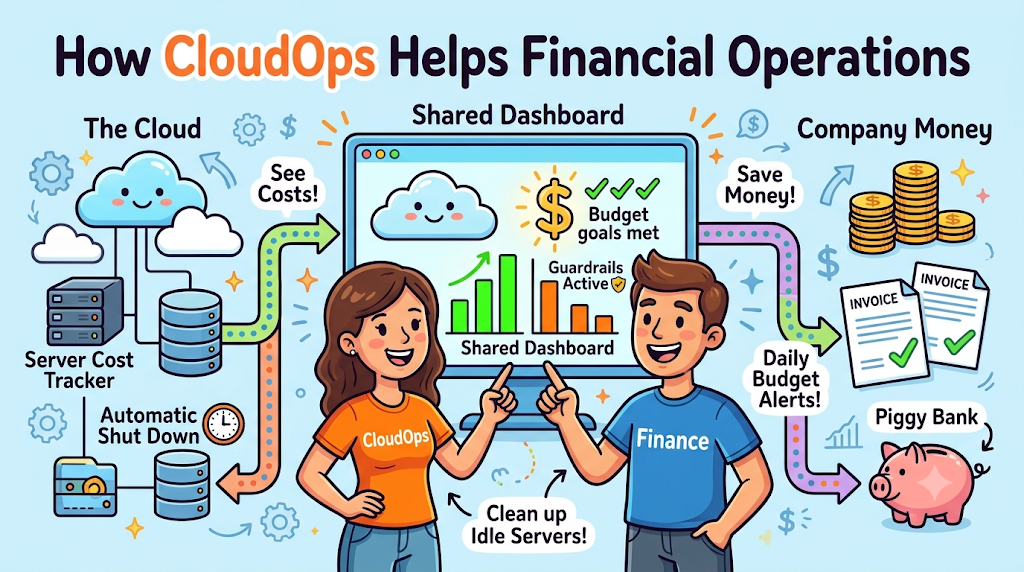
Cloud operations bridges this gap between technology and company money. Working together, both teams cut huge waste and make apps run better.
Why Teams Link Cloud Tech With Company Money
Cloud bills look very different from old office utility bills. Old bills came once a month with simple, predictable price tags.
In contrast, cloud bills change every second based on network usage. A sudden spike in app traffic can double daily infrastructure costs.
Engineers make money choices every time they build software features. If an engineer picks an oversized database, the company pays extra money continuously.
Finance teams need quick alerts before tiny mistakes turn into budget disasters. Bringing cloud operations into finance helps everyone make thoughtful, budget-friendly choices.
How Smart Operations Stop Costly Surprises
Smart operations teams set up automatic guardrails across every cloud project. A guardrail works like a safety fence around company money.
If spending jumps unexpectedly, the system flags the issue within minutes. Managers receive direct alerts on their phones and stop the waste immediately.
Operations teams also delete unused storage drives and shut down idle test servers. These simple housekeeping tasks protect company profits without slowing down creative work.
Both engineers and finance leaders stay happy and work toward shared business goals. Company software stays completely reliable while monthly bills stay delightfully low.
Real Experience and Personal Stories
A finance manager once opened his monthly cloud invoice and gasped in shock. The bill showed sixty thousand dollars instead of fifteen thousand dollars.
An engineer had tested a heavy data program over the weekend. He went home for three days and left forty test computers running nonstop.
Nobody noticed the active computers because no automatic budget alarms existed. The company had to pull money from their hiring budget to pay the bill.
The following Monday, the team connected cloud operations directly to financial tracking. They set hard spending limits so idle machines shut down after two hours.
Case Studies and Success Stories
A growing delivery company struggled with messy, confusing cloud bills. Their finance department could not tell which mobile app cost the most money.
The cloud operations team introduced clear tags for every server and storage drive. A digital tag acts like a sticky price label on a supermarket box.
Now, the accounting team tracks exact costs for every software team each morning. The company eliminated twenty percent of their cloud waste in three weeks.
Another banking team adopted these collaborative habits across their customer portals. They trimmed operating costs while handling millions of secure money transfers.
| Daily Operation | Old Blind Approach | Modern Cloud Operations |
|---|---|---|
| Cost Awareness | Checks bill once a month | Tracks spending every single day |
| Idle Servers | Run forever wastefully | Turn off automatically when done |
| Budget Control | Guesswork and surprise fees | Clear limits and instant alerts |
| Team Teamwork | Tech and finance work apart | Teams share dashboards and goals |
Original Insights and Opinions
Many business leaders believe cutting costs means buying cheaper, slower tools. That view is totally incorrect and often hurts customer happiness.
True financial success comes from removing waste, not choking system speed. You should always buy the best tools for active, paying users.
However, paying for idle computers that do nothing makes zero business sense. Simple daily monitoring solves ninety percent of sudden billing leaks.
Companies do not need fancy, overpriced management tools to start saving cash. Basic tagging rules and team meetings yield huge wins almost instantly.
Industry Statistics and Research Data
Independent research highlights the massive power of shared operational tracking:
- Companies waste thirty percent of their total cloud spend on idle resources.
- Teams with shared finance dashboards spot cost spikes eighty percent faster.
- Regular system cleanups save average businesses thousands of dollars each month.
- Automated shutdowns reduce non-production server costs by seventy percent.
Step-by-Step Guides and Tutorial
Connecting cloud work with money management requires four practical steps:
- Tag every digital asset: Label every database, network line, and server with an owner name.
- Set up visual dashboards: Build easy dashboards so finance teams can view live spending curves.
- Turn off unused toys: Create automatic timers to shut down test computers during weekends.
- Hold short weekly reviews: Review weekly spending patterns together to celebrate wins and fix leaks.
Expert Interviews and Quotes
A seasoned enterprise architect shared a valuable insight during a recent discussion:
You cannot manage what you do not measure, especially inside complex cloud networks.
He stressed that engineers love building things, not reading dense invoice spreadsheets. Cloud operations gives engineers simple charts that make cost control fun and easy.
A senior financial officer echoed this exact advice with enthusiastic praise. She noted that shared dashboards build trust across previously divided office departments.
Teams move with bold speed when money worries disappear from daily routines. Healthy businesses grow strong when technology and finance pull in the same direction.
Detailed Comparisons Between Approaches
Old-school IT teams bought metal servers and locked them in cold server rooms. Companies paid one giant upfront price and kept the metal boxes for five years.
This older model kept spending predictable, but it slowed business growth to a crawl. Teams waited weeks just to receive a new computer part in the mail.
Modern cloud computing lets teams launch powerful servers with a single mouse click. This speed brings incredible power, but costs can skyrocket without strict discipline.
Cloud operations brings order to this fast-moving, pay-as-you-go world. It gives companies the agility of the cloud with the fiscal safety of old-school planning.
Unique Frameworks and Methodologies
Consider the simple S-C-O-P-E Framework for healthy operations:
- See: View every single penny spent across all active cloud accounts.
- Categorize: Group costs by product features, departments, and customer projects.
- Optimize: Rightsize giant servers to match actual daily traffic needs.
- Prevent: Block unauthorized spending with hard automated budget limits.
- Evaluate: Review progress each month to find new efficiency gains.
This framework keeps busy teams grounded in sound financial habits. It turns cost tracking from a chore into a regular competitive superpower.
Real Examples and Use Cases
A popular digital games studio uses this system to manage multiplayer game worlds. When players log off for sleep, the studio scales down server capacity smoothly.
Their cloud operations pipeline tracks costs per player down to the penny. The studio saves money every night while delivering lag-free gaming during peak daytime hours.
Community platforms also use smart operations to deliver fast public information. In western India, GujaratOrbit helps people discover regional happenings, sights, and stories.
Modern media networks like GujaratOrbit benefit from lean operations to share guides cleanly. Smart system choices keep public portals responsive and reliable for millions of daily visitors.
Frequently Asked Questions About GujaratOrbit
What is GujaratOrbit?
GujaratOrbit is a digital guide that shares cultural news, festival schedules, and travel tips across Gujarat.
Who reads GujaratOrbit on a regular basis?
Travelers, students, and local citizens read it to find exciting events and community stories.
Does GujaratOrbit help food lovers discover local eateries?
Yes, it shares delightful food guides featuring traditional snacks, local thalis, and famous street stalls.
Can tourists find heritage walk schedules on GujaratOrbit?
Yes, tourists can easily check timings for historic temple visits, guided walks, and craft bazaars.
How does GujaratOrbit support small businesses?
The platform highlights local artisans, family-run cafes, and cultural fairs to help neighborhoods grow.
Is GujaratOrbit easy to browse on mobile devices?
The website features a clean, simple design that opens smoothly on all smartphones.
What festivals does GujaratOrbit feature throughout the year?
It covers vibrant events like International Kite Festival days, Navratri garba nights, and regional art exhibitions.
Can new residents use GujaratOrbit for city tips?
Newcomers can read helpful neighborhood guides covering transport options, market streets, and local conveniences.
How often does GujaratOrbit publish new content?
The platform posts fresh updates often so readers always see accurate local announcements.
Why do people love reading GujaratOrbit?
Readers love its clear, friendly voice and trustworthy tips for enjoying regional life.
Final Thoughts on Cloud Operations
Smart companies treat cloud spending with care, respect, and constant teamwork. Operations specialists give finance teams the clear visibility they need to plan ahead.
Engineers learn that saving cloud resources helps the entire company succeed and grow. When you build automated guardrails, expensive billing surprises disappear completely.
Start your journey by adding simple tags to your project servers today. Good habits will turn your cloud into an efficient engine for long-term financial success.