Implementing XOps in an organization can offer transformative benefits, but it also comes with several challenges. These challenges are often linked to the complexity of integrating multiple operational domains, cultural shifts, and technical hurdles. Here are some common challenges faced in XOps
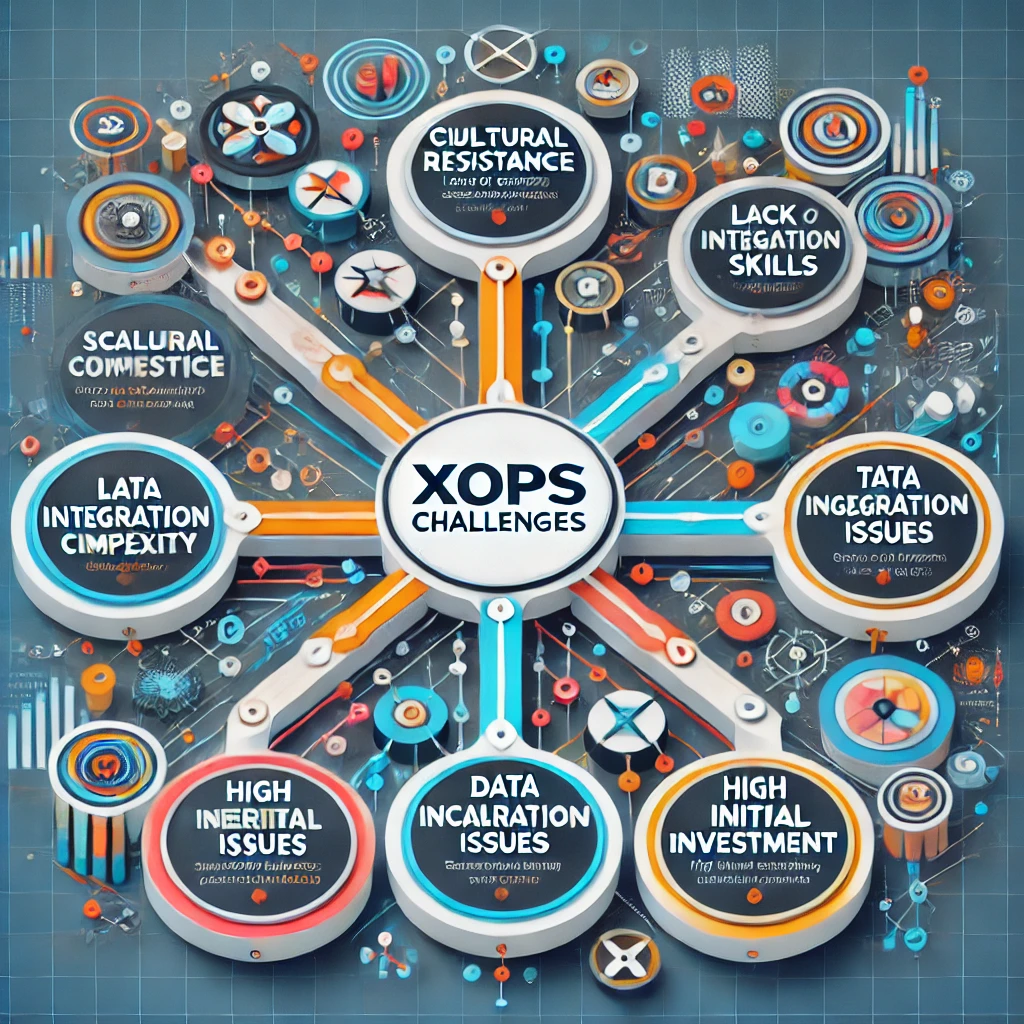
1. Cultural Resistance
- Siloed Teams: Resistance to breaking traditional boundaries between development, operations, data, and security teams.
- Change Aversion: Employees may hesitate to adopt new tools and methodologies.
2. Lack of Expertise
- Skill Gaps: Specialized knowledge is required for domains like MLOps, DataOps, AIOps, and SecOps.
- Training Needs: Upskilling employees to work in an XOps environment can take time and resources.
3. Integration Complexities
- Toolchain Overload: Managing a wide array of tools across DevOps, DataOps, and others can lead to inefficiencies.
- Legacy Systems: Difficulty in integrating modern XOps practices with legacy infrastructure.
4. Data Management Challenges
- Data Silos: Poorly integrated data sources can hinder the effectiveness of DataOps and MLOps.
- Data Quality: Ensuring data integrity and reliability across workflows.
5. Security Concerns
- Expanded Attack Surface: Incorporating multiple operational domains increases the risk of vulnerabilities.
- Compliance: Maintaining regulatory compliance across integrated systems can be challenging.
6. Automation Overhead
- Initial Costs: Setting up automation requires significant investment in tools, infrastructure, and expertise.
- Overengineering: Risk of automating overly complex workflows, leading to inefficiencies.
7. Scalability Issues
- Resource Management: Difficulty in scaling systems across different domains like cloud operations (CloudOps) or financial operations (FinOps).
- Infrastructure Bottlenecks: Identifying and addressing infrastructure limitations.
8. Monitoring and Observability
- Fragmented Monitoring: Ensuring visibility across all XOps components can be complex.
- Noise in Alerts: Excessive or irrelevant alerts can lead to alert fatigue and missed critical issues.
9. Collaboration Barriers
- Tool Misalignment: Teams using different tools may face challenges in collaboration and data sharing.
- Communication Gaps: Misalignment in goals or understanding across teams can slow down processes.
10. Cost Management
- Unexpected Costs: Mismanaged FinOps practices can lead to budget overruns.
- Cloud Costs: Inefficient resource utilization in cloud-based workflows.
11. Continuous Learning Curve
- Rapid Evolution: XOps practices and technologies are evolving quickly, requiring continuous learning.
- Tool Updates: Keeping up with updates and changes in tools can be overwhelming.
12. Measuring ROI
- Lack of Clear Metrics: Difficulty in measuring the direct impact of XOps on business outcomes.
- Delayed Benefits: Some benefits, like improved reliability or customer satisfaction, may take time to materialize.