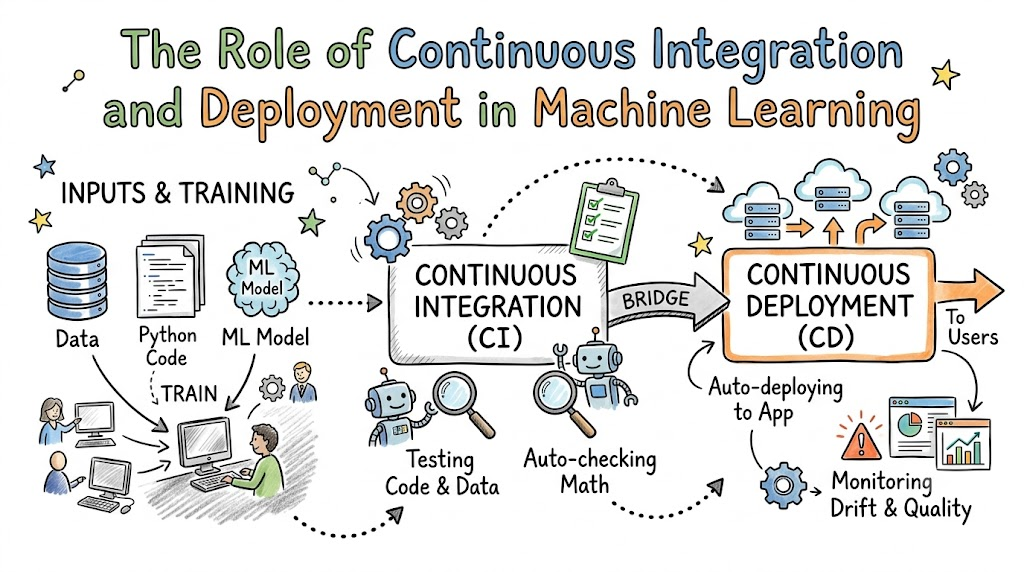
Computers can learn to recognize pictures, speech, and patterns. We call this machine learning. But teaching a computer takes a lot of work. Engineers build math recipes called models to do this job.
Teams need a smooth way to build and test these smart tools. They use smart training paths like Xopsschool to master these steps. When you connect good tools, your smart computer brain works much better!
What Is Machine Learning Operations?
Engineers call this work MLOps. It means machine learning and daily operations joined together.
Regular computer programs only deal with code. But smart machine programs also need data.
Data changes all the time in the real world. So, teams must watch both the code and the data.
MLOps helps teams update their smart models without messy errors. It keeps the computer brain fresh and fast.
What Does Continuous Integration Mean?
People shorten this name to CI. It means you put small code pieces together every day.
Whenever a coder writes a new step, an automated tester runs. The tester checks the math right away.
It also checks if the new code breaks any old parts. Next, it tests the training data for bad mistakes.
Because machines run these checks, humans do not waste time on dull work. Problems get caught in minutes!
What Does Continuous Deployment Mean?
People shorten this name to CD. It means sending the working model out to real users.
In the past, engineers moved files by hand. That took days, and people made silly mistakes.
Now, robot tools move the tested model into the live app. This happens with a single click.
So, users get the newest features right away. The computer system stays safe, fast, and happy.
Key Operational Concepts You Must Know
Smart systems rely on four simple pillars to work well:
- Code Testing: Robots test new lines of code to stop bugs early.
- Data Checks: Tools test fresh data to spot missing numbers.
- Model Training: Fast computers teach the math brain on new facts.
- Live Monitoring: Dashboards watch the model to make sure it gives good answers.
When you link these four steps, everything runs in a clean loop.Coders spend their day building cool things instead of fixing leaks!
Platform Implementation vs. Culture — What’s the Real Difference?
| Part of Work | Tool Setup Focus | Team Mindset Focus |
|---|---|---|
| Main Goal | Buy servers and set up test tools. | Help people share work and learn together. |
| Daily Habit | Run scripts and watch screens. | Talk kindly and fix bugs without blame. |
| Big Win | Fast build times and clean files. | Happy teams that trust each other. |
Buying fancy software is only half the battle. If people do not talk, mistakes still happen.
Teams must welcome feedback with a smile. When a test fails, do not get mad at anyone.
Instead, fix the test recipe together. That is how great teams build strong systems!
Real-World Use Cases of Modern Operations
Stopping Online Fraud
Banks use smart models to spot stolen credit cards. Millions of people buy things every minute.
The model reads each card swipe in a blink. If a swipe looks weird, it alerts the bank.
Criminals change their tricks every week. So, automated pipelines retrain the bank model on fresh clues daily.
The system sends out the new model safely at night. The bank stops thieves before they spend money!
Helping Doctors Spot Sickness
Hospitals use smart cameras to scan medical X-rays. The computer marks spots that look like illness.
Doctors check the marked spots to help sick patients faster. But doctor tools must never make silly errors!
The automated test checks every image model very strictly. If an update drops in score, the pipeline stops it.
Only top-grade models go to the doctor’s screen. This careful flow protects patient health every day.
Common Mistakes in Operations Engineering
Forgetting to Test the Data
Many coders only test their code. But bad data will fool a good model every time!
If you feed the model messy numbers, it gives bad guesses. Always check your data first.
Look for empty rows, wrong labels, and weird spikes. Clean data makes smart models shine!
Ignoring Model Drift
Models get old just like bread on a counter. People change how they talk, shop, and live.
If a model stays the same, its guesses get worse over time. We call this drift.
Set up alarms to watch how well your model guesses. When the score drops, retrain the model with fresh facts.
How to Become an Operations Expert — Career Roadmap
- Beginner Stage:
- Learn how to write simple code in Python.
- Practice saving code versions with Git.
- Learn how computers talk to each other over the web.
- Intermediate Stage:
- Build simple machine learning models on fun datasets.
- Write basic robot tests to check your code.
- Learn how to pack apps into tidy containers.
- Master Stage:
- Connect full pipelines that train and deploy models by themselves.
- Set up live monitors to track data shifts.
- Guide other coders and design big cloud systems.
FAQ Section
- Why do smart models need more checks than simple apps?Simple apps only have code, but smart models have code plus data. If the data gets messy, the whole app gives bad answers.
- Can small teams use these automated pipelines too?Yes, small teams need them the most! Automated tools save hours of boring work so small teams can move fast.
- What happens if a new model fails in the live app?Good systems roll back to the old, safe model instantly. Users never notice any trouble while coders fix the bug.
- Do I need to be a math genius to work in this field?No, you do not need super hard math. You only need to know how to connect tools, test systems, and solve practical problems.
- How often should teams retrain a live machine brain?It depends on how fast your data changes. Some models retrain every night, while others retrain once a month.
Final Summary
Continuous integration and continuous deployment give machine learning wings. They turn slow, manual projects into fast, dependable tools.
When you test both code and data early, you stop bad surprises. Your users get fresh, accurate answers every single day.
Keep your tools clean, talk with your team, and enjoy building smart systems!