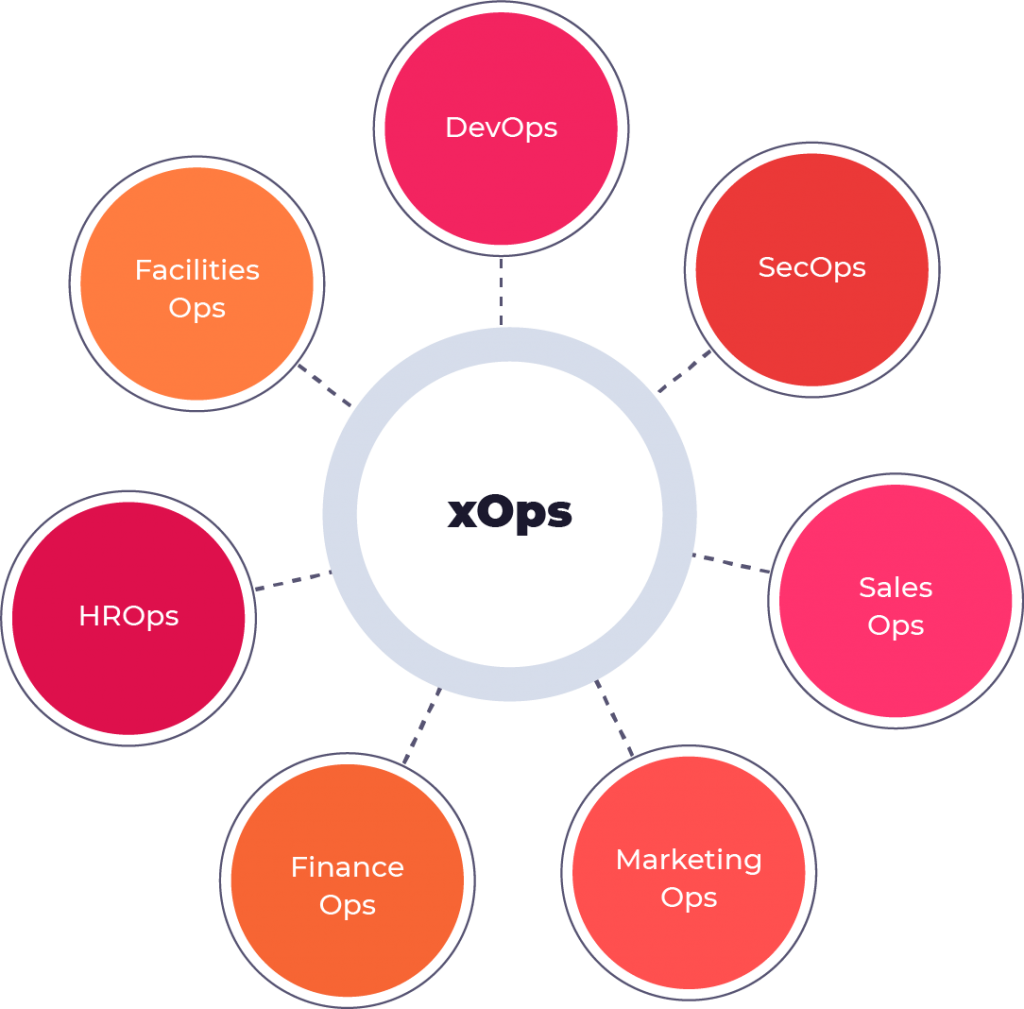
XOps, or Cross-functional Operations, is an emerging framework that integrates various operational practices across different domains within an organization. It extends beyond traditional DevOps by incorporating a broader range of operational disciplines, including DevSecOps, AIOps, MLOps, and BizDevOps. This holistic approach aims to enhance collaboration and efficiency across functional areas such as engineering, product development, customer service, and analytics.

Key Components of XOps:
- DevOps: Combines software development and IT operations to shorten the development lifecycle and deliver high-quality software continuously.
- SecOps (Security Operations): Integrates security practices into the operations process to ensure robust security measures are in place throughout the development and deployment phases.
- DataOps: Focuses on improving the quality and reducing the cycle time of data analytics by promoting automation and collaboration between data engineers and data scientists.
- MLOps: Applies DevOps principles to machine learning workflows, facilitating the continuous integration and deployment of machine learning models.
- AIOps: Utilizes artificial intelligence to enhance IT operations, enabling proactive issue detection and resolution through machine learning and analytics.
Benefits of Implementing XOps
- Improved Productivity: With streamlined operations and reduced manual intervention, teams can focus more on strategic initiatives rather than routine tasks.
- Cost Reduction: Automating processes leads to lower operational costs by minimizing errors and optimizing resource allocation.
- Increased Reliability: A unified approach ensures that systems are consistently monitored and maintained, enhancing overall system reliability.
- Modular Framework: XOps is designed with modularity in mind, allowing organizations to add or remove components as needed without disrupting existing workflows.
Conclusion
XOps represents a significant evolution in operational strategies by integrating diverse practices into a single framework aimed at enhancing agility, efficiency, and innovation within organizations. As businesses increasingly rely on data-driven decision-making and rapid technological advancements, adopting XOps can provide a competitive edge in navigating the complexities of modern operations.