Introduction
Modern supply chain management requires an agile, data-driven approach to navigate global logistics complexities. Traditional siloed software architectures often fail to unify critical vendor operations, fulfillment data, and tracking metrics. Consequently, operations leaders struggle with fragmented communication channels and severe blind spots in their inventory pipelines. To resolve these challenges, organizations need a central platform that integrates data streams, standardizes workflows, and delivers real-time visibility. By adopting the comprehensive SCMGalaxy OS framework, businesses can seamlessly bridge gaps between procurement, warehousing, and delivery tracking. This human-centric guide explores how an operating system approach transforms traditional workflows into ultra-responsive, resilient networks.
What SCMGalaxy OS Actually Means in a Supply Chain Context
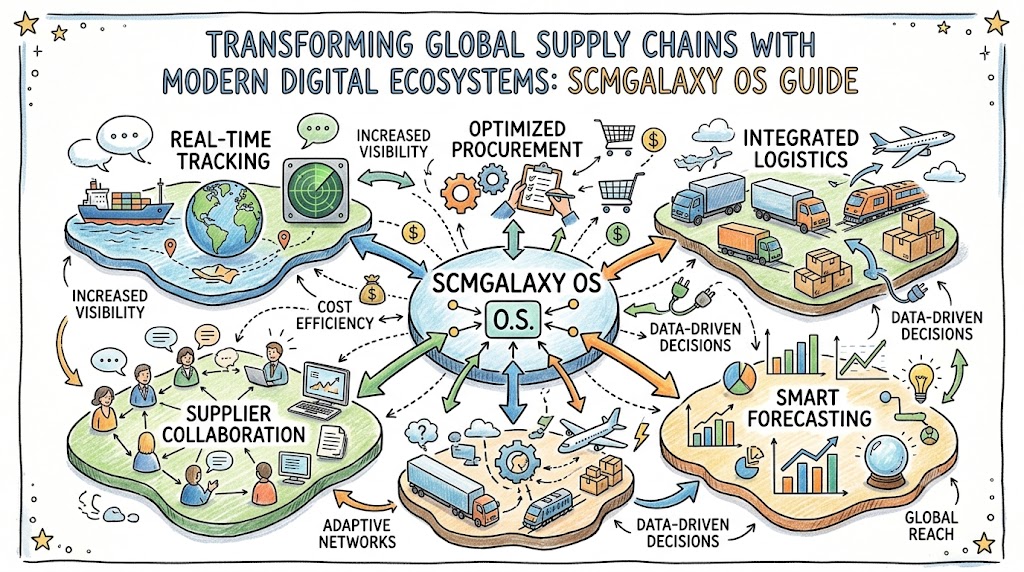
An enterprise-grade supply chain operating system functions as a unified digital backbone for your entire logistics network. Instead of managing separate software systems for tracking orders, warehouse inventory, and vendor communications, you can run everything on a single, integrated architecture. This framework acts as the central nervous system, collecting scattered information and transforming it into unified, actionable data streams.
Consequently, teams stop working in isolation because everyone gains access to the same synchronized operational realities. You can easily connect internal enterprise resource planning platforms with external vendor databases without encountering data compatibility errors. Ultimately, this approach shifts your business from a reactive stance to a highly proactive, modern fulfillment model.
Why Modern Supply Chains Need an Operating System Approach
Legacy software applications often create isolated information silos, forcing professionals to manually copy data across different platforms. When a sudden disruption occurs in the global market, legacy infrastructures fail to provide the agility required for rapid operational adjustments. Therefore, modern enterprises need a comprehensive ecosystem approach that dynamically synchronizes every moving piece of the logistics puzzle.
By utilizing an operating system framework, you establish a single source of truth that instantly updates whenever changes happen. As a result, your team spends significantly less time troubleshooting data errors and far more time optimizing core fulfillment workflows. This flexible approach ensures your organization remains resilient, competitive, and fully capable of handling sudden demand spikes.
Core Problems SCMGalaxy OS Is Built to Solve
Misaligned spreadsheets, delayed delivery notifications, and erratic inventory counts constantly drain corporate profitability. Furthermore, poor collaboration between internal procurement teams and external suppliers frequently leads to expensive production delays. An integrated digital ecosystem directly eliminates these common bottlenecks by providing real-time data access across the entire organizational footprint.
Therefore, you can finally eliminate manual status checks and reduce the risk of critical human errors during order fulfillment. The platform resolves visibility gaps, ensuring you never lose track of high-value shipments during transit. By addressing these foundational vulnerabilities, the architecture protects your bottom line while systematically enhancing customer satisfaction.
Key Capabilities That Make SCMGalaxy OS Useful
| Capability | Description | Core Operational Benefit |
|---|---|---|
| Unified Data Pipeline | Consolidates disparate logistics streams into a singular view. | Eliminates data silos and reduces manual verification. |
| Real-Time Tracking | Provides live monitoring of shipments and warehouse stocks. | Enables proactive problem-solving before delays impact clients. |
| Automated Workflows | Triggers actions based on pre-defined supply chain events. | Maximizes operational speed and minimizes human error. |
| Supplier Portal | Facilitates direct communication and order management. | Enhances collaboration and accountability with external vendors. |
This digital architecture combines advanced analytical capabilities with intuitive workflow automation tools to maximize operational efficiency. Because it processes complex data streams instantly, managers can identify shipping delays before they impact end customers. Additionally, the system features configurable alert mechanisms that automatically flag low inventory levels or delayed supplier milestones.
Consequently, your operational supervisors can make informed decisions without waiting for manual end-of-day reports. The platform also includes robust integration adapters that easily link with your existing legacy databases and software applications. This diverse feature set empowers companies to scale their logistics infrastructure without experiencing painful operational friction.
How SCMGalaxy OS Can Improve Procurement Operations
Procurement professionals frequently battle chaotic purchasing lifecycles, missing purchase orders, and complex vendor onboarding procedures. However, deploying a central supply chain operating system introduces absolute clarity and structural order to these complex purchasing cycles. The platform helps procurement specialists automate routine requisition approvals while systematically tracking vendor performance metrics in real time.
Consequently, buyers can quickly identify which suppliers consistently deliver high-quality components on schedule. Transitioning to this automated approach prevents accidental double-ordering and keeps corporate purchasing strategies aligned with actual warehouse demands. Ultimately, your sourcing department transforms into a strategic, value-generating asset rather than a slow, administrative bottleneck.
How SCMGalaxy OS Supports Inventory Visibility and Control
Maintaining optimal inventory levels requires a delicate, data-driven balance between customer demand and available warehouse storage space. When you lack clear visibility, your business either suffers from costly stockouts or accumulates excessive, expensive overstock. Fortunately, this advanced operational platform provides a crystal-clear, real-time window into your global stock balances across multiple fulfillment facilities.
Therefore, warehouse managers can set precise automated reorder thresholds to ensure consistent product availability without overextending capital. The system accurately tracks every single stock movement, from the moment goods arrive until final customer dispatch. This meticulous oversight significantly reduces carrying costs, optimizes working capital, and ensures your shelves remain perfectly stocked.
Strengthening Warehouse and Fulfillment Workflows with SCMGalaxy OS
Chaotic warehouse environments lead to picking errors, delayed dispatches, and dissatisfied customers. By applying an operating system approach, you can systematically optimize picking routes and streamline space utilization strategies. The platform directs floor staff via clear, automated instructions, which substantially accelerates daily sorting and packing operations.
Consequently, your fulfillment hubs can handle higher order volumes without requiring additional temporary staff or expanding physical footprints. The system also bridges the gap between receiving docks and digital inventory ledgers, updating records immediately upon delivery. These structural improvements eliminate warehouse bottlenecks and ensure your fulfillment operations move at a rapid, highly predictable pace.
Better Supplier Coordination Through a Shared Operational System
Healthy supply chains depend heavily on transparent communication and accountability between an organization and its vendor network. Unfortunately, traditional email chains and disjointed messaging applications create confusion, leading to missed deadlines and incorrect shipments. This unified architecture provides a centralized, secure portal where external suppliers view orders and update production timelines directly.
As a result, vendors can adjust to order modifications instantly, reducing friction and minimizing costly manufacturing mistakes. This shared digital workspace builds mutual trust and ensures all parties remain fully aligned on performance expectations. By elevating vendor relationships, you secure a more reliable, responsive, and resilient production pipeline.
Logistics Visibility and Delivery Coordination Become Easier
Transit operations often feel like a black box once shipments leave the safety of your fulfillment center docks. However, integrating this digital ecosystem gives you granular tracking control over every transit leg, from first-mile to final-mile delivery. The platform aggregates live telemetry data from carriers, allowing you to monitor transport temperatures, routes, and estimated arrival times.
Therefore, logistics managers can reroute delayed shipments before they disrupt production schedules or miss critical customer deadlines. This high level of tracking precision helps customer service teams provide clients with accurate, proactive delivery updates. Ultimately, you gain full mastery over your logistics network, reducing shipping overhead while ensuring reliable, on-time arrivals.
Targeted Value Across Engineering Personas
- Supply Chain Engineers: Can design resilient distribution models using integrated, real-time data pipelines and flexible workflow orchestration nodes.
- Systems Architects: Can seamlessly connect legacy applications with modern cloud systems using standardized API endpoints and secure integration protocols.
- Operations Analysts: Can extract clean, pre-consolidated performance data to build accurate forecasting models and uncover hidden cost-saving opportunities.
- Data Engineers: Can easily build reliable data pipelines because the platform provides well-documented schemas and standardized, structured data outputs.
Evaluating the Ten Critical Governance Domains
Managing a modern supply chain requires strict adherence to corporate governance, regulatory compliance, and high data security standards. This framework incorporates ten critical governance domains, including comprehensive audit trails, role-based access controls, and vendor compliance tracking modules. The system meticulously logs every transaction, status alteration, and user action to guarantee total transparency for internal audits.
Consequently, compliance officers can quickly verify that all logistics operations align perfectly with environmental and regional legal standards. The architecture also safeguards proprietary corporate data, preventing unauthorized internal or external access to sensitive financial metrics. By embedding governance directly into daily operations, the platform mitigates corporate liability while fostering an ethical, compliant business environment.
Why SCMGalaxy OS Matters for Decision-Making, Not Just Monitoring
Many basic logistics platforms simply display historical data, forcing managers to figure out operational adjustments completely on their own. In contrast, this advanced operating system approach actively analyzes live data streams to suggest optimal corrective actions during unexpected disruptions. For instance, if a severe storm delays a critical supplier, the system automatically evaluates alternative vendors with available inventory.
Therefore, leadership teams can make fast, data-backed strategic pivots rather than relying on slow, unverified guesswork. This shifts your operational approach from basic passive observation to proactive, intelligent, and highly dynamic network orchestration. Consequently, your business can confidently navigate market volatility while consistently outperforming competitors who rely on older static reporting.
Who Can Benefit Most from SCMGalaxy OS
- Enterprise Logistics Directors: Who must orchestrate multi-facility fulfillment networks while keeping total operational costs as low as possible.
- Global Sourcing Managers: Who require transparent, centralized vendor portals to oversee international manufacturing partners and track component quality metrics.
- Warehouse Operations Supervisors: Who need to eliminate local picking errors, accelerate packing times, and maintain perfect inventory accuracy.
- Corporate Compliance Officers: Who must maintain complete, unalterable audit histories to easily satisfy strict international trade regulations.
SCMGalaxy OS as a Practical Platform, Not Just a Promotional Idea
It is easy to get lost in abstract technical jargon, but this platform delivers highly practical, real-world utility. It functions as a tangible working environment designed to solve concrete daily problems, like broken workflows and fragmented communications. The architecture avoids superficial software gimmicks, focusing instead on robust data normalization, dependable APIs, and intuitive user interfaces.
Consequently, corporate teams can rapidly adopt the software without undergoing lengthy, exhausting retraining cycles. The system proves its immense practical value by consistently reducing order processing times and boosting worker productivity across every department. It represents a solid, reliable, and long-term infrastructure investment designed to support sustained, friction-free corporate expansion.
What to Evaluate Before Adopting SCMGalaxy OS in Your Business
Before deploying a comprehensive digital operating system, your organization must carefully evaluate its current data maturity levels. You need to examine how cleanly your existing legacy applications can connect with a modern, integrated data platform. Additionally, leadership must evaluate internal change management strategies to ensure staff smoothly transition away from manual spreadsheets.
It is also vital to analyze the specific operational areas that require immediate optimization, such as warehouse management or supplier communication. Mapping out these key requirements ahead of time helps prevent deployment delays and ensures a highly focused implementation process. Proper initial evaluation guarantees that the new platform aligns perfectly with your broader corporate growth strategies.
Best Practices for Getting Maximum Value from SCMGalaxy OS
To extract the highest possible return on investment, you should implement the system using a structured, phased rollout strategy. Start by migrating your most critical operational bottleneck, such as supplier communication, before moving on to larger warehouse workflows. Furthermore, ensure your teams regularly audit automated workflow rules to keep them closely aligned with changing market dynamics.
Continuous staff training is also essential, as it helps your workforce fully utilize new analytical tools and tracking features. You should also collaborate closely with external vendors, encouraging them to maximize their use of the shared supplier portal. By following these proven operational best practices, you unleash the full transformative power of your supply chain ecosystem.
Frequently Asked Questions About SCMGalaxy OS
- How does this platform connect with our existing legacy ERP systems?The system utilizes robust, built-in API adapters and flexible data integration protocols to connect seamlessly with legacy databases. This ensures continuous, real-time data synchronization without requiring a complete overhaul of your existing corporate software infrastructure.
- Can small to mid-sized businesses benefit from this operating system approach?Yes, the architecture is highly scalable and can be configured to match the specific operational scale of growing businesses. It allows smaller companies to eliminate manual workflows early, establishing a strong foundation for smooth, friction-free business expansion.
- What specific security measures protect our sensitive vendor and financial data?The framework incorporates enterprise-grade encryption protocols, strict role-based access controls, and continuous security monitoring systems. These layers guarantee that your proprietary operational information remains fully protected against unauthorized data breaches.
- How long does a typical implementation and data migration cycle take?Implementation timelines vary depending on your network complexity, but a phased rollout model usually takes a few weeks. Starting with core modules allows organizations to achieve rapid operational improvements without disrupting daily fulfillment workflows.
- Does the platform provide real-time tracking for international ocean and air freight?The ecosystem aggregates live tracking feeds from global logistics carriers, offering deep visibility across international shipping lanes. This enables logistics managers to track overseas shipments and handle customs delays proactively.
Final Thoughts
Embracing an operating system approach represents a major strategic leap forward for modern, growth-oriented enterprises. By breaking down data silos and uniting workflows under a single architecture, you build an incredibly resilient supply chain network. The resulting real-time visibility empowers your teams to make smart, proactive decisions that protect profitability and elevate customer service. Moving away from fragmented, legacy systems reduces operational friction and prepares your business for sustainable long-term success. Investing in a unified digital backbone ensures your organization remains agile, competitive, and fully prepared for future global market shifts.