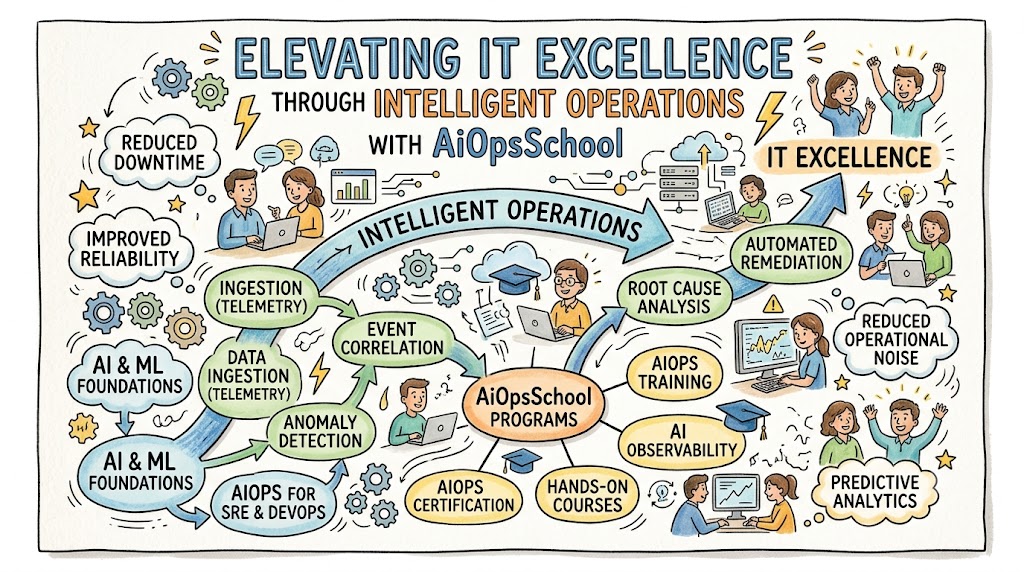
Introduction
Modern enterprise IT environments are facing an unprecedented operational crisis due to unrelenting system complexity. Engineering teams find themselves constantly inundated by thousands of daily monitoring alerts, a phenomenon known as alert fatigue, which frequently masks critical underlying system failures. As monolithic infrastructures give way to highly distributed cloud architectures, tracking down the root cause of a single latency spike becomes an exhausting game of digital hide-and-seek. This operational overhead stalls innovation, drives up mean time to resolution, and burns out talented engineers who spend their shifts reacting to fires rather than building scalable systems. To overcome these systemic bottlenecks, forward-thinking organizations are aggressively shifting toward automated, data-driven management models. Navigating this massive technological evolution requires deep, structured knowledge, which is exactly why professionals rely on specialized AIOps Training at AiOpsSchool to master the tools and strategies defining the future of enterprise infrastructure.
Defining the Scope of Algorithmic IT Systems
To understand why this shift is happening, we must first address a fundamental question: What is AIOps? At its core, Artificial Intelligence for IT Operations represents the fusion of big data, machine learning, and automation to enhance and streamline infrastructure management. Instead of relying on rigid, human-configured thresholds that trigger static warnings, this modern methodology applies advanced algorithms to continuous streams of operational data.
The primary objective is to transform chaotic, fragmented telemetry information into clear, actionable intelligence. It does not replace the human engineer; rather, it acts as an intelligent assistant that sifts through massive datasets at machine speed. By analyzing historical patterns and real-time signals simultaneously, it enables operations teams to move away from stressful, reactive firefighting and adopt a highly predictable, proactive stance.
Key Operational Concepts You Must Know
Before implementing advanced automation, engineers must fully grasp the core foundational building blocks that govern AIOps in IT operations. These concepts form the vocabulary and technical groundwork necessary to manage modern software deployments successfully.
Full-Stack Observability
Observability goes far beyond traditional monitoring by letting teams infer the internal states of a system based entirely on its external outputs. It provides the deep visibility required to understand complex system behaviors, rather than simply stating whether a server is functional or broken.
Unified Telemetry Streams
Modern architectures rely heavily on the collection and synthesis of three distinct data types, often referred to as the pillars of observability:
- Metrics: Numeric values measured over specific time intervals that track resource consumption, such as CPU utilization, memory allocation, and request counts.
- Logs: Time-stamped text records generated by applications and infrastructure components that provide specific contextual details about discrete events.
- Traces: End-to-end journeys of individual requests as they move across distributed microservices, highlighting precisely where delays or errors occur.
Advanced Event Correlation
Instead of treating every system event as an isolated incident, modern infrastructure platforms group related alerts together. Event correlation analyzes timestamps, topology maps, and historical relationships to connect a sequence of individual warning signals to a single, underlying operational issue.
Baseline Configurations vs. Anomaly Detection
Traditional monitoring relies on hard-coded limits, such as sending an alert when disk usage exceeds 85%. Algorithmic operations, by contrast, continuously analyze historical data to establish a dynamic baseline of normal behavior. The system then automatically flags a sudden, unexpected deviation as an anomaly, even if the absolute value remains well within traditional limits.
Automated Remediation
The ultimate maturity stage of modern operations involves executing self-healing workflows without requiring manual human intervention. Once the platform identifies a known, recurring issue with high confidence, it triggers automated scripts to restart services, clear caches, or scale infrastructure dynamically.
A Strategic Starting Point for Modern Engineers
The transition to algorithmic infrastructure management represents a massive shift in how businesses handle software uptime. If you are exploring AIOps for beginners, establishing a solid foundation right now is a crucial step toward future-proofing your career.
- Exponential Data Explosion: Modern cloud architectures generate far too much telemetry data for human operators to analyze manually, making algorithmic filtering absolute necessity.
- High Market Demand: Organizations across every major industry are actively seeking professionals who understand how to merge data science with infrastructure engineering.
- Shift from Reactive to Proactive: Mastering these concepts allows you to stop responding to urgent midnight alerts and instead focus on designing resilient, self-healing system behaviors.
Distinguishing Interconnected Technical Methodologies
Engineers often confuse the boundaries between different operational paradigms. To clear up this confusion, it helps to analyze how these disciplines intersect and where they diverge in practice. The following table highlights the unique focus areas of AIOps vs DevOps and AIOps vs MLOps.
| Concept | Primary Focus | Core Question It Answers |
|---|---|---|
| DevOps | Accelerating the software delivery lifecycle through continuous collaboration and automation. | How can we safely deploy high-quality software changes to production faster? |
| AIOps | Enhancing infrastructure reliability by applying machine learning to operational telemetry data. | How can we use data science to automatically detect, isolate, and remediate production issues? |
| MLOps | Standardizing the deployment, monitoring, and management of machine learning models in production. | How do we operationalize, track, and update machine learning models reliably over time? |
Platform Implementation vs. Culture — What’s the Real Difference?
A frequent misconception among technology leaders is treating algorithmic operations as a plug-and-play software installation. In reality, successful deployment requires balancing sophisticated technology platforms with deep cultural adjustments.
+------------------------------------------------------------+
|                  MODERN OPERATIONAL PARADIGM               |
+------------------------------------------------------------+
|  PLATFORM IMPLEMENTATION     |      CULTURAL TRANSFORMATION |
|                              |                              |
|  * Ingest Telemetry Streams   |      * Cross-Team Trust      |
|  * Configure AI Models       |      * Embrace Automation    |
|  * Deploy Observability Tool |      * Blameless Post-Mortems|
+------------------------------------------------------------+
True operational evolution requires a continuous feedback loop between your technology stack and your team’s day-to-day habits. To see how these two sides complement each other, consider the structural differences outlined below.
| Platform Implementation | Cultural Transformation |
|---|---|
| Ingesting distributed telemetry streams through standardized agents. | Building trust between separate software development and operations teams. |
| Configuring algorithmic tools to aggregate and correlate alerts automatically. | Shifting organizational mindsets to trust and accept automated remediation actions. |
| Creating centralized visibility dashboards to track real-time system performance. | Establishing post-mortem workflows that focus on fixing system design flaws rather than assigning blame. |
A team can invest heavily in comprehensive AIOps Training and install the most advanced data platforms available. However, if engineers choose to ignore automated recommendations or turn off algorithmic notifications because they lack trust, the system will fail to deliver value. True operational resilience is achieved only when modern platform configuration combines with a collaborative culture focused on continuous improvement. This complete operational transformation is precisely what teams learn to achieve when mastering AIOps in IT operations.
Core AIOps Use Cases
Implementing intelligent analytics across infrastructure platforms addresses several critical challenges that have plagued engineering teams for years. Organizations leverage these modern capabilities across several core AIOps use cases:
- Dynamic Anomaly Detection: Systems continuously analyze incoming telemetry data to identify irregular performance patterns, catching subtle software regressions before they impact the end-user experience.
- Intelligent Event Correlation: The platform groups thousands of noisy, redundant system alerts into a single, comprehensive incident ticket, dramatically reducing cognitive clutter for on-call engineers.
- Advanced AIOps Root Cause Analysis: Rather than forcing human engineers to manually dig through disjointed logs, automated tracking engines isolate the exact underlying code deployment or hardware failure that triggered an outage.
- Predictive Capacity Planning: Machine learning models study historical infrastructure consumption trends to project future resource needs, preventing costly capacity shortages weeks before they happen.
- Automated Incident Remediation: When specific, well-documented system faults occur, the platform automatically triggers self-healing playbooks to restore healthy operational states instantly.
- Optimizing AIOps in IT Operations: Integrating smart analytics into daily workflows enables enterprise technology departments to maximize total infrastructure visibility while minimizing manual toil.
Real-World Use Cases of Modern Operations
To understand how these concepts function in production, let us look at how different industries apply these principles to solve complex problems.
An international e-commerce platform experienced a sudden, severe database latency spike during a high-traffic holiday shopping event. Instead of forcing engineers to manually cross-reference disconnected logs, the monitoring system leveraged AIOps root cause analysis to instantly isolate a newly deployed microservice code error. The platform quickly implemented an automated rollback script to restore normal checkout speeds, preventing millions of dollars in potential revenue loss.
A global commercial banking institution struggled with recurrent system overloads during unpredictable morning transaction spikes. By analyzing historical utilization patterns, their operations platform applied predictive capacity analytics to dynamically allocate cloud resources ahead of time. This proactive scaling eliminated performance degradation entirely, allowing the bank to maintain strict compliance with service level agreements while optimizing infrastructure spending.
A fast-growing SaaS provider faced persistent alert fatigue as their distributed Kubernetes environments generated millions of daily monitoring notifications. Implementing intelligent event correlation allowed them to compress their overall alert volume by more than 92%, grouping isolated infrastructure warnings into a few distinct, actionable incidents. This massive reduction in noise allowed the engineering team to focus their attention on critical platform stability tasks rather than triaging redundant notifications. These examples demonstrate the immense value realized when organizations successfully deploy these advanced AIOps use cases within AIOps in IT operations.
An Overview of the Modern Tooling Landscape
Navigating the ecosystem of modern infrastructure management requires a clear understanding of the software platforms that drive automated operations. As engineers progress through a comprehensive AIOps Tutorial, they encounter specialized AIOps Tools organized into distinct categories based on their primary operational roles. The following comprehensive AIOps tools list outlines the core technologies driving the industry forward today.
Full-Stack Monitoring and Observability Platforms
- Dynatrace: Utilizes a powerful, deterministic AI engine called Davis to automatically discover dependencies, map topologies, and provide precise root-cause explanations for performance anomalies.
- Datadog: Features Watchdog, an embedded AI engine that automatically surfaces hidden system anomalies, analyzes log patterns, and isolates root causes across complex distributed cloud environments.
- New Relic: Incorporates an advanced AI-driven telemetry platform that offers anomaly detection, alert correlation, and deep performance insights across various application stacks.
- Splunk Enterprise Security: Combines massive machine data ingestion capabilities with advanced analytics to help operations teams detect operational anomalies and security threats simultaneously.
Event Correlation and IT Service Management Tools
- BigPanda: Specialized in automated event correlation, transforming noisy data streams from multiple monitoring sources into clean, high-context operational insights.
- PagerDuty: Integrates machine learning algorithms to group related incoming alerts, predict incident impact, and automate orchestration paths for on-call engineering teams.
- Moogsoft: Focuses heavily on noise reduction and early incident detection by applying unsupervised machine learning algorithms directly to raw, unstructured event logs.
- ServiceNow ITOM: Bridges operational intelligence with enterprise workflows, automatically mapping infrastructure dependencies and triggering automated resolution paths.
Open-Source Frameworks and Cloud-Native Services
- OpenTelemetry: A vendor-neutral, open-source observability framework designed to standardize the collection, generation, and exportation of distributed metrics, logs, and traces.
- Amazon DevOps Guru: A fully managed cloud service powered by machine learning that automatically analyzes operational data to identify anomalous behavior in AWS environments.
Common Mistakes in Operations Engineering
Transitioning to automated operations is a complex journey filled with technical hurdles. Teams frequently stumble when adopting AIOps in IT operations due to a few common pitfalls.
Failing to Configure Proper Noise Reduction Filters
Teams often connect automated engines directly to raw telemetry streams without setting up initial filtering logic. This mistake amplifies alert fatigue instead of reducing it, as the platform begins generating thousands of algorithmic warnings alongside standard notifications.
- The Fix: Establish precise baseline thresholds and group similar data streams before enabling automated alerting.
Treating Automation as a Set-and-Forget Solution
Many organizations assume that machine learning models will manage themselves indefinitely once configured. However, production environments change constantly due to frequent application updates, which causes model accuracy to degrade over time.
- The Fix: Schedule regular model review sessions to ensure algorithmic patterns stay aligned with recent infrastructure updates.
Overlooking Telemetry Data Quality and Normalization
Feeding unstructured, inconsistent, or incomplete log data into an analytical platform leads to highly inaccurate operational conclusions. Machine learning models require clean, well-formatted inputs to extract meaningful, actionable trends.
- The Fix: Enforce standardized data logging practices across all development teams using open frameworks like OpenTelemetry.
Deploying Automated Remediation Workflows Too Early
Enabling automated self-healing scripts before validating the system’s root-cause identification leads to unpredictable results. A false-positive conclusion can trigger an unexpected automated server restart, turning a minor issue into a major outage.
- The Fix: Run automated scripts in an advisory mode first, requiring a manual human confirmation before executing any infrastructure changes.
Neglecting Cross-Team Buy-in and Collaboration
When operations teams implement advanced monitoring platforms without training application developers on how to interpret the outputs, adoption stalls. Siloed knowledge prevents organizations from fully leveraging automated root-cause insights.
- The Fix: Use comprehensive AIOps root cause analysis insights as shared learning tools during blameless post-mortem reviews across all engineering departments.
Driving Site Reliability Engineering Metrics
Site Reliability Engineers focus heavily on maintaining system availability, scalability, and performance. Integrating intelligent data analysis directly supports these goals by optimizing key metrics within AIOps for SRE frameworks.
+------------------------------------------------------------+
|                  SRE PERFORMANCE TIMELINE                  |
+------------------------------------------------------------+
|  Incident Occurs ---> Automated MTTD ---> Automated MTTR   |
|         |                     |                     |      |
|         v                     v                     v      |
|   Anomaly Detected     Root Cause Found      System Healed |
+------------------------------------------------------------+
Integrating these analytics directly impacts the entire incident management timeline, keeping systems within defined Service Level Objectives.
- Mean Time to Detection (MTTD): Advanced anomaly detection models flag subtle performance shifts instantly, alerting engineering teams long before a system breach or major service crash occurs.
- Mean Time to Resolution (MTTR): Automated root-cause correlation engines instantly isolate the specific line of code or faulty hardware component responsible for an incident, shaving hours off troubleshooting times.
- Service Level Objectives (SLOs): Resolving underlying system dependencies quickly and reliably allows teams to protect their error budgets and maintain consistent compliance with business-critical availability targets.
Seeing AIOps in Action
To clearly understand how these individual concepts function as a cohesive ecosystem, let us walk through a step-by-step operational simulation.
The Problem
During a busy afternoon traffic spike, an enterprise financial application experiences a sudden 40% drop in user checkout completions. Simultaneously, thousands of isolated monitoring warnings begin flooding the central engineering dashboard.
The Step-by-Step Resolution Path
- Algorithmic Ingestion: The underlying telemetry engine ingests real-time streams of metrics, logs, and traces from thousands of distributed microservices containers.
- Noise Suppression: The platform automatically compresses 1,500 individual alert flags into a single incident, recognizing that the notifications are linked to the same underlying event.
- Topology Mapping: The system analyzes live infrastructure maps to trace the dependencies between frontend user checkouts and backend database instances.
- AIOps Root Cause Analysis: The platform isolates a recent, automated database schema change that caused a specific storage volume to run out of input/output operations per second.
- Automated Remediation: The platform executes a pre-approved self-healing script that dynamically provisions additional high-performance storage capacity to the database cluster.
The Measurable Result
The entire issue is detected, analyzed, and successfully resolved within 90 seconds. The organization completely avoids a costly, multi-hour manual war room session, preserving critical customer trust and saving thousands of dollars in potential operational overhead. This seamless lifecycle shows the power of AIOps in IT operations.
How to Become an Operations Expert — Career Roadmap
Transitioning your engineering skill set to support modern, automated environments requires following a structured educational framework. Aspiring professionals can build an elite operational background by following this clear, step-by-step technical path.
- Master Core IT and Monitoring Fundamentals: Begin by gaining practical experience with foundational Linux administration, networking concepts, container technologies like Kubernetes, and standard logging setups.
- Engage in Structured Technical Education: Build a deep conceptual framework by enrolling in comprehensive AIOps Training programs that explain how data science applies to infrastructure engineering.
- Complete a Practical Technical Curriculum: Dedicate time to a hands-on AIOps Course to gain direct experience configuring machine learning models, managing data pipelines, and setting up automated workflows.
- Earn a Globally Validated Industry Credential: Formalize your expertise and stand out to enterprise recruiters by successfully completing a professional AIOps Certification.
- Pursue Deep Technical Specialization: Apply your automated operations knowledge to specialized modern career paths, such as Site Reliability Engineering, advanced DevOps platform management, or enterprise cloud architecture.
Frequently Asked Questions
- What are the primary eligibility requirements for pursuing an AIOps Certification?Professionals entering this field typically have a foundational background in systems administration, cloud infrastructure, DevOps practices, or software development. Having a basic familiarity with scripting languages like Python and standard monitoring tools will help accelerate your learning curve during the program.
- How does an AIOps Foundation Certification differ from specialized engineering programs?An introductory framework focuses primarily on explaining core concepts, industry terminology, and high-level platform use cases to build general operational literacy. Specialized engineering programs, by contrast, dive deep into hands-on tool configuration, algorithmic model tuning, and building automated system remediation scripts.
- What core technical skills are covered in a comprehensive AIOps Course?A comprehensive curriculum typically covers multi-source telemetry data ingestion, configuring automated event correlation engines, establishing dynamic anomaly detection baselines, and implementing secure self-healing playbooks. Students also gain practical experience working with leading enterprise observability platforms.
- Can software developers benefit from enrolling in algorithmic operations programs?Yes, software developers can significantly benefit from learning these methodologies. Understanding how machine learning systems analyze production data allows developers to write highly observable code, build more accurate telemetry frameworks, and design more resilient software architectures.
- How long does it typically take to complete a professional training program?The overall timeline varies depending on the specific program depth and your weekly time commitment. Foundations programs can often be completed within a few weeks, whereas comprehensive, hands-on engineering tracks usually require several months of consistent study to fully master.
- Are these modern infrastructure practices restricted solely to large-scale enterprise companies?While large enterprises with massive cloud footprints were early adopters due to their sheer system scale, smaller organizations increasingly implement these automated practices. Any team managing complex microservices or high-density container environments can benefit from automated noise reduction and intelligent anomaly detection.
- How does mastering these concepts improve an engineer’s daily on-call experience?By filtering out thousands of redundant alerts and compressing them into distinct, actionable incidents, these platforms drastically reduce alert fatigue. Engineers spend far less time triaging noisy notifications and chasing false alarms, allowing them to focus on high-value system engineering tasks.
Why Get an AIOps Certification?
Enrolling in a structured program and earning a validated AIOps Certification offers clear, tangible advantages for technology professionals looking to advance their careers.
Instant Professional Credibility
Holding an advanced, verified credential proves to prospective employers and industry peers that you possess the practical skills required to manage complex cloud environments. It differentiates you in a competitive job market, showing your commitment to modern infrastructure methodologies.
Structured, Comprehensive Learning Paths
Attempting to piece together various open-source tutorials can leave significant gaps in your technical understanding. A validated AIOps Foundation Certification ensures you cover every critical concept methodically, from initial telemetry data collection to building advanced automated self-healing scripts.
Significant Career and Salary Leverage
As companies continue to automate their operations departments, demand for skilled professionals who can manage these intelligent platforms is skyrocketing. Gaining these specialized skills positions you for high-impact roles, such as Site Reliability Engineer or Cloud Infrastructure Architect, which command top-tier compensation packages.
Where to Learn AIOps
Building a successful career in automated infrastructure management requires accessing high-quality, industry-validated educational resources. AiOpsSchool provides a robust ecosystem of specialized training tracks carefully designed to help professionals at all skill levels master modern operational technologies.
- AIOps Training: Deep, instructor-guided programs that combine fundamental data science principles with practical enterprise infrastructure management strategies.
- AIOps Course: Interactive, hands-on learning modules focused on configuring real-world observability platforms, managing telemetry streams, and building automated self-healing scripts.
- AIOps Certification: Globally recognized professional validation programs that verify your technical capability to design, implement, and lead intelligent operational workflows.
- AIOps Tutorial: Step-by-step instructional guides designed to walk beginners through core tool installations, basic event correlations, and early monitoring automation setups.
Final Thoughts
The continuous expansion of cloud-native systems makes traditional, manual infrastructure monitoring increasingly unsustainable. To maintain high system availability and eliminate alert fatigue, modern engineering teams must transition toward automated, data-driven operational workflows. Embracing this shift requires a solid understanding of machine learning principles, telemetry configuration, and automated incident response strategies. Investing in a structured AIOps Training program allows you to master these critical technical competencies and build long-term career resilience. Earning a professional AIOps Certification validates your ability to lead complex operational transformations, making you a highly valuable asset to forward-thinking technology organizations. Take the definitive next step in your professional development journey by visiting AiOpsSchool.com to explore expert-led learning paths designed to prepare you for the future of autonomous IT operations.