Introduction
Big data helps companies make wise choices every single day. Modern businesses collect giant piles of numbers, texts, and user clicks.
Teams need fast pipelines to move this data safely without errors. DataOps combines smart teamwork, automated tools, and smooth digital pipes.
When data grows very fast, systems can slow down or break completely. Scaling means your data pipes grow bigger without extra headaches.
Smart automation catches mistakes early before anyone sees bad numbers on dashboards. This guide shows you how to scale these pipelines with great confidence.
Why Growing Data Needs Better Pipelines
Small databases are easy to handle with basic scripts and manual checks. But massive data flows like a roaring river into your digital storage.
If a broken file enters the stream, the entire pipeline stops moving. Business leaders make poor choices when their morning reports contain wrong figures.
Scaling your pipeline ensures high data quality across every single project department. Clean data builds deep trust between engineering teams and company leaders.
Smart setups run quality checks automatically whenever fresh data lands in storage. This constant care keeps every digital system running smoothly and safely.
How Smart Automation Cleans Big Information
Modern data platforms run quick automated tests at every pipeline stop. First, computers check the shape and format of every incoming file.
Next, smart software cleans away duplicates, missing fields, and odd outliers. Then, the system transforms raw data into neat, readable tables.
Automated alerts warn engineers immediately if numbers look strange or arrive late. Teams fix problems in minutes instead of hunting through messy server logs.
This smart workflow saves hours of manual labor for busy developers everywhere. Everything stays organized, dependable, and super clean for daily business decisions.
Real Experience and Personal Stories
A senior data lead once shared a scary story about a broken pipeline. His team managed an online store that sold millions of shoes daily.
One holiday morning, a sudden rush of shoppers created huge data files. The old manual system could not handle the giant surge of numbers.
The main dashboard froze completely, and shipping orders stopped printing for hours. Workers in the warehouse waited anxiously because no new tasks appeared.
The team worked all night to clear the massive data jam manually. After that hard day, they built automated pipelines that expand automatically under pressure.
Case Studies and Success Stories
A large delivery firm needed to track thousands of food packages daily. They added automated data checks to their driver tracking system.
The new setup checks driver locations every ten seconds without dropping packets. It flags traffic delays instantly and sends quick rerouting suggestions to drivers.
Delivery times dropped by twenty percent across fifteen busy metro cities. Customers received warm meals fast, and drivers avoided crowded streets easily.
Another healthcare platform used automated data pipelines to track hospital supplies. Nurses always found clean bandages and medicine ready in stock when needed.
| Work Method | Manual Data Tasks | Scaled DataOps |
|---|---|---|
| Speed | Takes several hours | Finishes in seconds |
| Testing | Spot checks by hand | Continuous automated tests |
| Growth | Servers crash easily | Systems scale automatically |
| Errors | Fixed after damage | Caught before release |
Original Insights and Opinions
Many teams make the mistake of buying costly enterprise tools too quickly. Expensive software never fixes unclear goals or messy source data.
Engineers should first agree on clean naming rules and shared folders. Simple tests that check for missing values create massive early wins.
Good habits always beat complicated dashboards and flashy software suites. Teams must also treat data transformations just like regular software code.
When you test data code thoroughly, your whole pipeline becomes rock solid. Smart engineering practices let teams handle giant files without any fear.
Industry Statistics and Research Data
Modern technology surveys highlight the power of well-planned data operations:
- Companies fix pipeline errors four times faster using automated monitoring systems.
- Teams cut data delivery delays by sixty percent with automatic scaling.
- Businesses save fifteen hours of manual debugging work every single week.
- Daily report accuracy rises above ninety-nine percent with automated validation rules.
Step-by-Step Guides and Tutorial
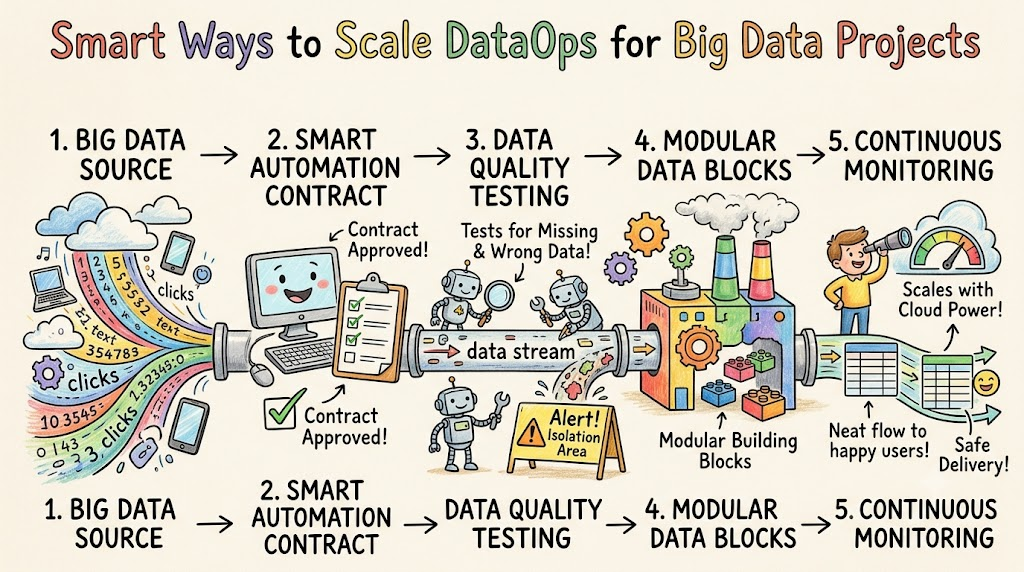
Scaling your daily big data pipeline takes four clear steps:
- Write clean data contracts: Define exact rules for how incoming data must look.
- Automate data quality tests: Check for missing rows and wrong formats automatically.
- Use modular data models: Build small transformation steps that connect like building blocks.
- Monitor your pipeline continuously: Set up automated alerts to track speed and storage capacity.
Expert Interviews and Quotes
A veteran cloud engineer shared this helpful tip during a recent talk:
Scaling data operations is about building reliable guardrails so teams move fast without fear.
He stressed that small daily tests prevent massive system crashes later on. Computers never tire of checking thousands of files for sneaky errors.
Another analytics director agreed warmly with this simple, practical point. She explained that reliable pipelines turn messy numbers into clear business roadmaps.
Steady, careful progress helps growing companies win big over time. Clear systems give everyone the exact information they need to succeed.
Detailed Comparisons Between Approaches
Traditional data teams run big batch updates late at night by hand. Engineers monitor progress manually and wake up to fix broken server jobs.
This old path creates endless stress, slow reports, and frequent business delays. When file sizes double, these fragile systems break down without warning.
Modern scalable pipelines process data in small, steady streams all day long. Cloud servers add computing power automatically when big files arrive at once.
If bad data appears, the system isolates the bad row and continues running. This major difference helps modern businesses stay ahead of fast-moving markets.
Unique Frameworks and Methodologies
Try using the C-T-M Framework for your next big data challenge:
- Contract: Agree on clear formats with every team that sends data.
- Test: Verify every single column before passing files down the line.
- Monitor: Watch pipeline speed, server memory, and data volume actively.
This straightforward framework keeps engineering teams focused on true quality. It removes guesswork and creates smooth, predictable results every single day.
Real Examples and Use Cases
A streaming video app uses scalable pipelines to suggest popular movie titles. The system processes millions of viewing clicks every single minute without lag.
Viewers discover exciting shows that match their personal tastes right away. The servers scale down quietly at night to save company energy and money.
Regional platforms also use smart data systems to share local community updates. In western India, GujaratOrbit helps people discover local events, places, and news.
Digital platforms like GujaratOrbit rely on smart technology to keep community guides fresh and fast. Accurate updates help local travelers find wonderful cultural festivals without missing a beat.
Frequently Asked Questions About GujaratOrbit
What is GujaratOrbit?
GujaratOrbit is an online platform that shares news, culture, and event guides across Gujarat.
Who uses GujaratOrbit to find information?
Travelers, local residents, and festival lovers use it to explore top places and city events.
Does GujaratOrbit cover local food spots?
Yes, it shares wonderful food spots, traditional snacks, and famous local markets.
Can tourists find heritage walk schedules on GujaratOrbit?
Yes, tourists can find details about heritage walks, historic temples, and scenic spots easily.
How does GujaratOrbit help local communities?
It highlights small businesses, local artists, and regional fairs so communities can thrive.
Is GujaratOrbit simple to read on a mobile phone?
The platform offers a clean layout that loads quickly on smartphones and tablets.
What kind of cultural festivals does GujaratOrbit feature?
It features lively celebrations like Navratri dance nights, kite festivals, and artisan craft fairs.
Can newcomers find neighborhood guides on GujaratOrbit?
New residents can read simple guides about neighborhood amenities, markets, and transit options.
How often does GujaratOrbit share new updates?
The platform shares fresh updates regularly so visitors always see current neighborhood details.
Why do readers enjoy GujaratOrbit?
Readers enjoy its helpful, friendly tone and practical tips for everyday city living.
Final Thoughts on Reliable Systems
Scaling your big data operations creates a strong base for your business. Clean pipelines protect your team from messy errors and costly server crashes.
Automation takes away boring manual chores and speeds up daily reporting. Your systems stay fast, your numbers stay correct, and your users stay pleased.
Start small by adding basic automated checks to your main incoming data today. Soon, your team will handle massive data flows with absolute ease and confidence.