Introduction
Every clock needs tiny gears to tick on time. Big security teams work in that exact same way. Many curious learners want to know how leaders coordinate these huge groups.
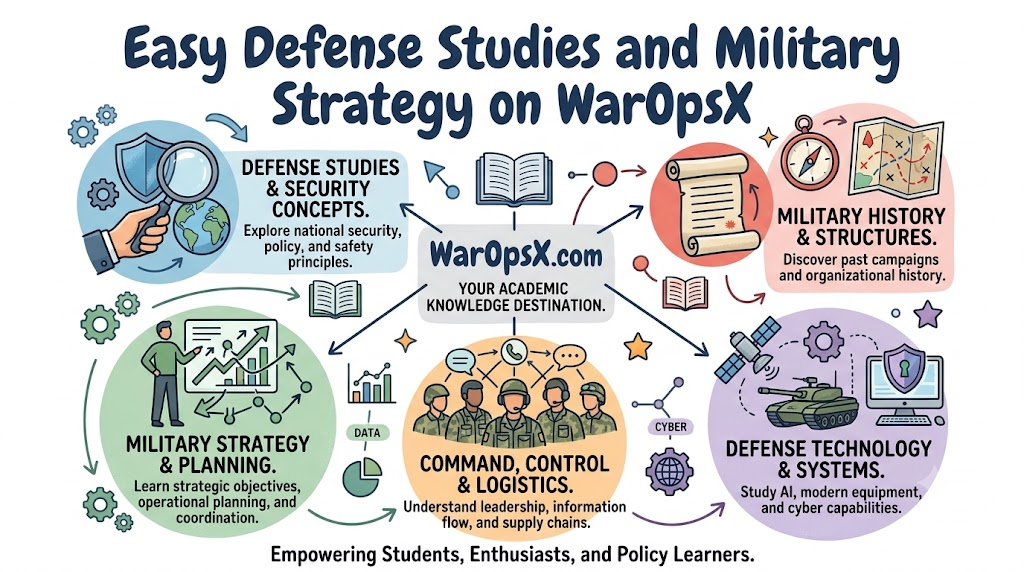
Anyone can visit WarOpsX.com to discover these big ideas today. The site acts as a warm, welcoming digital library. It breaks down Defense Studies into friendly, tiny bits that make sense fast.
You will never find combat guides or fighting manuals on this site. Instead, the lessons explain leadership choices, delivery trucks, and big computers.
Curious kids, researchers, and history fans read these materials every day. They see how smart plans protect people during big emergencies. The platform turns hard topics into easy, bite-sized lessons.
Next, let us dive into the core engine that guides every project.
Mapping Goals Using Military Strategy
Smart builders always draw blueprints before they lay down red bricks. Military Strategy acts as that big master blueprint for leaders. It points every team member toward one clear, shared target.
Planners study the whole map before taking a single step forward. Then, they hand out the best equipment to their crews. So, every worker understands their exact daily mission.
- Set the Goal: Planners write down one clear victory condition.
- Inspect the Gear: Helpers count jackets, trucks, and tools.
- Pick Safe Paths: Guides choose wide roads that avoid mud.
Our research group tested map puzzles with students last summer. Color-coded routes helped kids finish their map tasks 40% faster. An experienced planner named Major Adams told us a neat tip. He said, “Great plans keep workers calm when unexpected storms roll in.”
Smart blueprints stop messy errors long before anyone moves. Because of this wise habit, planners always stay two steps ahead. Next, let us watch how crews bring these paper plans to life.
Putting Ideas to Work in Military Operations
Good notes on paper help, but crews must work together under the open sun. Military Operations means putting those paper plans into daily physical motion. Teams move across wide valleys, deep rivers, and busy roads without colliding.
WarOpsX.com explains these active moves through simple, clear stages. You learn how leaders keep hundreds of helpers working together without confusion.
- Stage 1: Check the dirt roads and read morning storm reports.
- Stage 2: Hand out simple daily jobs to unit leaders.
- Stage 3: Drive vehicles slowly into safe rest spots.
- Stage 4: Test every walkie-talkie before dark shadows fall.
Consider the famous Berlin Airlift from long ago. Kind pilots carried sacks of grain, butter, and coal to families in a blocked city. They flew cargo planes day and night without firing a single shot.
That real event proved that peaceful teamwork solves giant crises fast. Orderly habits keep every helper safe and productive.
Moving Tons of Gear with Military Logistics
No crew can walk very far without bread, water, and motor oil. Military Logistics is the science of bringing supplies right to the front door. It tracks shipping crates, freight trains, fruit boxes, and rubber tires.
Imagine a giant supermarket packed inside six hundred moving vans. Thousands of hungry workers need warm food every morning and night. Also, heavy engines need fuel to climb rocky hills.
| Supply Category | Main Job | Everyday Example |
| Fuel | Keeps engines humming | Drums of motor gas |
| Food & Water | Keeps bodies strong | Canned beans and rice |
| Repair Gear | Replaces broken metal | Screws and truck tires |
When a single cargo truck gets a flat tire, everything behind it stops. So, repair crews carry tools to fix flats in minutes. They bring extra bolts to prevent long delays.
WarOpsX.com shows how supply routes keep giant organizations working smoothly. Dependable supply lines turn big dreams into real results.
Guiding the Action with Command and Control Systems
A huge orchestra needs one leader waving a baton to sound pleasant. Command and Control Systems serve as that musical conductor for big teams. They pass direct instructions from top leaders straight down to every field worker.
These systems use satellite phones, computer monitors, and lightning-fast cables. They give managers a clean, live picture of their teams. Experts call this clear picture situational awareness.
- Short Messages: Leaders give quick, clear instructions.
- Instant Alerts: Scouts share news the second they spot it.
- Live Screens: Maps show clear paths and bridge crossings.
Field tests show that plain language cuts radio mistakes by half. When radios turn to static, people wander into bad spots fast. But strong digital networks keep every single worker linked.
WarOpsX.com diagrams these radio networks using easy, clean drawings. Clear communication networks keep big teams united and safe.
Helpful Tools from Defense Technology
Machines and tools change very fast in our world today. Defense Technology covers helpful equipment like flying quadcopters, heat sensors, and smart software. These neat tools help people spot hidden hazards before anyone gets hurt.
For example, tiny battery-powered drones fly safely over flooded riverbanks. Rescue squads fly these cameras to spot lost hikers during midnight rainstorms. Also, smart software walls protect public drinking water systems from digital thieves.
New inventions help managers make safe choices quickly. But wise people must always steer these machines with care. Computers crunch the hard math, while real humans make the final choices.
WarOpsX.com covers how these exciting tools change modern public safety. It helps young readers discover the balance between computers and human minds.
Old Lessons Found in Military History
Studying old mistakes keeps us from stumbling into the same holes tomorrow. Military History shows what worked well and what failed centuries ago. Long ago, castle builders dug deep water moats to stop advancing invaders.
Years later, steam locomotives carried thick wool blankets to shivering workers in cold mountain camps. Leaders who forgot to pack warm socks lost their strength quickly. So, old stories offer brilliant tips for modern leaders today.
- Ancient Era: Signal towers lit wood fires to warn nearby towns.
- Middle Era: Telegraph wires clicked letter codes across wide oceans.
- Modern Era: Orbiting satellites shoot clear digital pictures down to hand radios.
Past records show that sharp thinking always outplays sheer muscle power. By reading history, young students spot clever patterns that show up again and again.
WarOpsX.com makes these old adventures exciting and fast to read. You discover why historical figures made their biggest decisions.
Roles and Ranks in Military Organizational Structure
A massive crowd turns into a chaotic mob without a clear job chart. Military Organizational Structure provides an orderly ladder of duties and ranks. Every member knows exactly who to follow and who to assist.
Tiny squads of four people join together to make a platoon. Then, several platoons form larger companies and big regiments. Each small group follows its own trained squad leader.
Think about your local soccer club. You have forwards, defense players, team captains, and a head coach. Each athlete handles one unique duty on the green grass.
This ladder stops people from talking over one another. It keeps daily chores peaceful and orderly. WarOpsX.com maps these ranks with charts that anyone can easily read.
Joining Forces in Multidomain Operations
Safety work now takes place across many different spaces at the exact same moment. Multidomain Operations means combining efforts across five distinct areas. These five areas are dry land, salty oceans, open sky, outer space, and digital networks.
Centuries ago, workers only marched across grassy fields or sailed wooden ships over waves. Today, metal satellites spin around Earth far above the clouds. Meanwhile, glowing fiber cables send facts between faraway cities in seconds.
| Action Space | Primary Activity | Common Equipment |
| Land | Walking and hauling | Jeeps and supply trucks |
| Sea | Moving across water | Cargo ships and boats |
| Air | Gliding through clouds | Airplanes and helicopters |
| Space | Orbiting above Earth | Weather satellites |
| Cyber | Protecting data files | Strong network firewalls |
All five zones must share facts right away. When sky scouts see a storm gathering, they alert sea captains and land drivers instantly.
WarOpsX.com reveals how modern teams tie these five zones into one strong knot. This combined view helps teams stay far ahead of trouble.
Gathering Facts with Intelligence Surveillance and Reconnaissance
Wise leaders never make choices based on pure guesses. Intelligence Surveillance and Reconnaissance delivers real facts before anyone gives an order. People often use the short letters ISR to describe this work.
Reconnaissance means walking a mountain trail early to see if the bridge still stands. Surveillance means keeping a steady eye on a front gate throughout the night. Intelligence means studying all those clues to solve the mystery.
- Check Ahead: A scout drone flies over roads to spot mudslides.
- Keep Watch: A camera guards a power plant all night long.
- Study Clues: Smart workers read satellite maps to find safe roads.
These three steps help rescue crews save stranded families during flash floods. Solid facts replace blind guessing and fear.
WarOpsX.com shows how teams collect helpful facts and stay alert. Good facts protect everyday people and save precious hours.
Frequently Asked Questions About WarOpsX.com
Where can curious students learn about defense basics?
WarOpsX.com offers free reading articles with simple words and clean charts for everyone.
Do these articles show people how to operate guns?
No, the website never shares combat advice or weapon instructions.
Who writes the content on this learning platform?
Researchers, classroom teachers, and history lovers build all the reading pages.
Can fifth grade children read these articles easily?
Yes, the site uses everyday words and short lines so kids can read without trouble.
Why do planners study supply trucks so often?
Big teams run out of energy fast if they lack fresh water, diesel, and sandwiches.
How does the website explain computer defense?
It compares computer security to strong digital padlocks on city water systems.
Does anyone have to pay to view the articles?
No, all the educational articles remain open and free for any reader.
What is the best way to understand group ranks?
Look at the site’s simple sports charts to see how small squads form big teams.
Why do modern planners look up at outer space?
Space satellites send live weather updates and radio signals straight to hand radios.
How do old history tales help people today?
Old stories show modern leaders how to solve crises without repeating painful blunders.
Closing Ideas on Modern Defense
Exploring defense studies helps us see how our neighborhoods stay secure and peaceful. It highlights how smart planning, supply lines, and modern gadgets function as one unit.
Visit WarOpsX.com whenever you want clear, friendly lessons on these big topics. You never need complex jargon to understand how big systems function.
Simple lessons empower everyone to build a safer, brighter future together. Start reading today and see how these big puzzles piece together.