Introduction
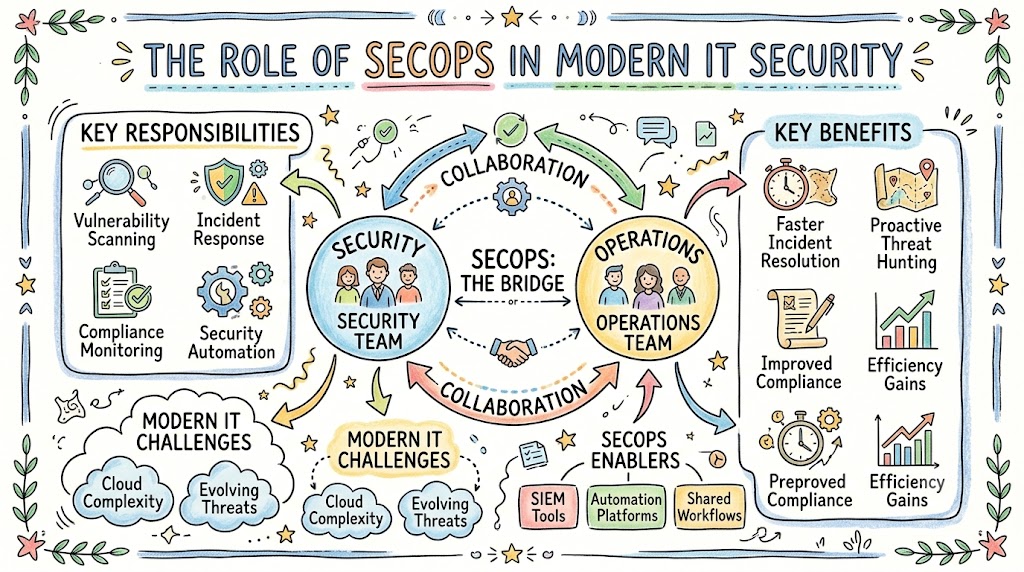
In today’s rapidly evolving digital landscape, organizations face an unprecedented array of cybersecurity threats that grow more sophisticated by the day. The traditional approach of keeping security and operations teams in separate silos has proven ineffective against modern cyber adversaries who exploit the gaps between these functions. This is where SecOps emerges as a game-changing paradigm that bridges the critical divide between security and operations teams. At Xopsschool , we’ve witnessed firsthand how organizations that embrace SecOps principles achieve superior security outcomes while maintaining operational efficiency. The integration of security practices into operational workflows represents a fundamental shift from reactive security postures to proactive, intelligence-driven defense mechanisms. By fostering collaboration between these traditionally disparate teams, SecOps creates a unified approach to identifying, mitigating, and responding to security threats in real-time. This comprehensive guide explores the multifaceted role of SecOps in modern IT security, providing practical insights for organizations looking to strengthen their security posture.
Understanding SecOps: Bridging Security and Operations
SecOps represents the convergence of security operations and IT operations into a cohesive framework that prioritizes both protection and performance. The philosophy behind SecOps recognizes that security cannot be an afterthought or a separate function that operates independently from the teams building and maintaining systems. Instead, security must be woven into the fabric of operational processes, creating a symbiotic relationship where both security and operations teams work toward common goals. This integration enables organizations to detect and respond to threats more rapidly while minimizing disruptions to business operations.
The traditional model of separating security and operations created significant challenges for organizations. Security teams would often implement controls that hampered operational efficiency, leading to friction between groups. Operations teams, focused primarily on system availability and performance, might inadvertently introduce vulnerabilities through rushed deployments or configuration changes. SecOps resolves these conflicts by establishing shared objectives and creating transparent communication channels between teams.
Modern SecOps implementations leverage automation, continuous monitoring, and integrated toolchains to create a unified security posture. Security teams gain visibility into operational processes, while operations teams understand the security implications of their actions. This mutual understanding enables faster incident response, more effective vulnerability management, and improved compliance with regulatory requirements. Organizations that successfully implement SecOps report significantly reduced mean time to detection and response, along with enhanced overall security effectiveness.
The Evolution of Security Operations
The journey from traditional security operations to modern SecOps reflects the broader evolution of IT infrastructure and threat landscapes. In the early days of enterprise computing, security was primarily about perimeter defense, with firewalls and antivirus software serving as the primary protection mechanisms. Security teams operated in relative isolation, focusing on blocking known threats and conducting periodic vulnerability assessments. Operations teams, meanwhile, focused on maintaining system availability and performance, often viewing security measures as obstacles to their primary objectives.
The rise of cloud computing and distributed architectures fundamentally changed this dynamic. Organizations began adopting hybrid and multi-cloud environments, breaking down traditional network perimeters and creating new attack surfaces. The proliferation of endpoints, mobile devices, and IoT sensors expanded the attack surface exponentially, making it impossible for security teams to maintain visibility through traditional approaches. Meanwhile, threat actors evolved their tactics, developing sophisticated attacks that could bypass traditional security controls and exploit operational weaknesses.
The adoption of DevOps methodologies further accelerated the need for integrated security approaches. Development and operations teams embraced continuous integration and deployment practices, delivering software updates at unprecedented speeds. This rapid pace of change created security challenges, as traditional security review processes couldn’t keep up with the velocity of deployments. The shift-left movement emerged, advocating for integrating security earlier in the development lifecycle, but this alone wasn’t sufficient to address the broader operational security challenges.
Modern SecOps evolved as a response to these challenges, incorporating lessons from both DevOps and traditional security operations. The approach emphasizes automation, continuous monitoring, and collaborative incident response. Security teams adopted tools and practices from operations, such as infrastructure as code and configuration management, while operations teams integrated security considerations into their standard workflows. This convergence has created a new discipline that combines the best practices of both fields to address modern security challenges effectively.
Key Operational Concepts You Must Know
Understanding the foundational concepts of SecOps is essential for anyone looking to implement or improve security operations within their organization. These concepts form the building blocks of effective security programs and provide a framework for thinking about security in operational terms.
Continuous Monitoring and Observability represent the cornerstone of modern SecOps practices. Unlike traditional periodic assessments, continuous monitoring provides real-time visibility into system behavior, enabling rapid detection of anomalies and potential threats. This approach leverages telemetry data from across the infrastructure, including logs, metrics, and traces, to create a comprehensive picture of system health and security posture. Observability extends beyond simple monitoring to include the ability to understand system behavior through external outputs, enabling teams to diagnose issues without requiring direct access to internal system states.
Threat Intelligence Integration transforms security operations from reactive to proactive by incorporating external threat data into decision-making processes. This concept involves collecting, analyzing, and applying information about emerging threats, attack patterns, and adversary tactics. Threat intelligence enables security teams to anticipate potential attacks, prioritize vulnerabilities based on real-world threat likelihood, and develop more effective defense strategies. The integration of threat intelligence into operational workflows ensures that security decisions are informed by current threat landscapes rather than historical assumptions.
Incident Response Automation revolutionizes how organizations handle security incidents by reducing manual intervention and accelerating response times. This concept involves creating automated workflows that can detect, analyze, and respond to security events without human intervention. Automation doesn’t replace human judgment but rather handles routine incidents, allowing security professionals to focus on complex threats requiring human analysis. Automated incident response reduces the time between detection and containment, minimizing potential damage from security breaches.
Vulnerability Management as Continuous Process shifts the approach to vulnerabilities from periodic scanning to ongoing assessment and remediation. This concept recognizes that vulnerabilities are constantly discovered and that organizations must maintain continuous awareness of their security posture. Effective vulnerability management includes automated scanning, risk-based prioritization, and integration with patch management processes. The continuous nature of this approach ensures that organizations can respond quickly to newly discovered vulnerabilities before they can be exploited.
Security Orchestration and Automation involves coordinating security tools and processes to work together seamlessly. This concept addresses the challenge of managing multiple security tools that may not natively integrate, creating a unified security infrastructure. Orchestration enables security teams to create complex workflows that span multiple tools, automating routine tasks and ensuring consistent security operations. The automation aspect reduces human error while improving operational efficiency.
Compliance as Code applies infrastructure as code principles to security compliance, enabling organizations to maintain continuous compliance with regulatory requirements. This concept involves codifying compliance requirements into automated checks that validate system configurations against standards. Compliance as code ensures that security controls remain effective as infrastructure changes, reducing the burden of manual compliance audits while improving overall security posture.
Security Metrics and KPIs provide the quantitative foundation for measuring and improving security operations. This concept involves defining meaningful metrics that reflect security effectiveness, operational efficiency, and business impact. Effective metrics go beyond simple counts of incidents to include measures of detection speed, response effectiveness, and vulnerability remediation times. These metrics enable organizations to demonstrate security value to stakeholders while identifying areas for improvement.
Platform Implementation vs. Culture — What’s the Real Difference?
Understanding the distinction between platform implementation and cultural transformation is crucial for successful SecOps adoption. While many organizations focus primarily on implementing security platforms and tools, the real challenge often lies in creating a culture that embraces security as a shared responsibility.
Platform implementation refers to the technical aspects of deploying security tools, establishing infrastructure, and configuring security controls. This involves selecting appropriate technologies, integrating them into existing environments, and ensuring they function correctly. Organizations often invest significant resources in security platforms, including SIEM systems, threat intelligence platforms, and automated response tools. These technical implementations provide the foundation for security operations, enabling monitoring, detection, and response capabilities.
However, platform implementation alone cannot achieve the full benefits of SecOps. Many organizations discover that even the most sophisticated security platforms fail to deliver expected outcomes without corresponding cultural changes. Security tools can generate alerts that go unaddressed, provide visibility that isn’t acted upon, and enable capabilities that remain unused. The disconnect between technical capabilities and operational practices often stems from cultural barriers that prevent effective collaboration between security and operations teams.
Cultural transformation involves shifting mindsets, behaviors, and organizational structures to support integrated security operations. This includes breaking down silos between security and operations teams, establishing shared objectives, and creating accountability for security outcomes across the organization. Cultural change requires leadership commitment, ongoing communication, and investment in training and development. The cultural aspects of SecOps address the human elements that determine whether security tools and processes are effectively utilized.
The relationship between platform implementation and culture is complementary rather than competitive. Technical platforms enable and support cultural transformation, while culture ensures that platforms are effectively utilized. Organizations that succeed in both areas create a virtuous cycle where cultural changes drive more effective platform usage, which in turn reinforces positive cultural behaviors.
Common pitfalls in balancing platform and culture include focusing exclusively on technology investments while neglecting cultural change, or attempting cultural transformation without providing adequate technical support. Successful SecOps implementations recognize the interdependence of these elements and invest appropriately in both. This balanced approach ensures that security capabilities are not only technically available but also effectively utilized to achieve security objectives.
Real-World Use Cases of Modern Operations
Examining real-world use cases provides practical insights into how SecOps principles are applied in diverse organizational contexts. These examples demonstrate the versatility and effectiveness of SecOps approaches across different industries and scenarios.
Financial Services Security Operations face unique challenges due to the sensitive nature of financial data and stringent regulatory requirements. A multinational bank implemented SecOps practices to address these challenges, creating a unified security operations center that integrated monitoring across traditional banking systems, mobile applications, and cloud infrastructure. The bank established automated incident response workflows that could detect and block fraudulent transactions in milliseconds, preventing millions in potential losses. Through continuous threat intelligence integration, the bank identified emerging attack patterns targeting the financial sector and developed proactive defenses.
Healthcare Security and Patient Data Protection require extreme care due to the sensitivity of medical information and regulatory requirements like HIPAA. A large hospital network implemented SecOps to protect patient data while maintaining critical care system availability. The network deployed continuous monitoring across medical devices, electronic health records, and administrative systems, creating unified visibility into security threats. Automated vulnerability management ensured that critical medical systems remained protected without disrupting patient care. The SecOps approach enabled the hospital to detect and respond to ransomware attempts before they could impact patient services.
E-commerce Platform Security demands both strong security and exceptional performance to maintain customer trust and business viability. An online retailer implemented SecOps practices to protect customer data while ensuring shopping experiences remained seamless. The company deployed automated fraud detection systems that could analyze transaction patterns in real-time, blocking suspicious activities while minimizing false positives. Through continuous performance monitoring and security testing, the retailer maintained fast website response times while protecting against emerging threats.
Manufacturing Operational Technology Security presents unique challenges due to the integration of traditional operational technology with modern IT systems. A global manufacturer implemented SecOps to protect its industrial control systems while maintaining production efficiency. The company deployed specialized monitoring tools that could detect anomalies in industrial processes without interfering with operations. Through careful integration of security controls into manufacturing workflows, the company maintained production uptime while significantly reducing security risks.
Government and Public Sector Security requires balancing security with transparency and public accountability. A government agency implemented SecOps to protect sensitive citizen data while maintaining public service availability. The agency established automated compliance monitoring to ensure continuous adherence to security standards and regulations. Through collaborative incident response processes, the agency could quickly address security issues while maintaining public trust.
Common Mistakes in Operations Engineering
Understanding common mistakes in operations engineering helps organizations avoid pitfalls that can compromise security effectiveness. These mistakes often stem from well-intentioned but misguided approaches to security operations.
Over-reliance on Alerting Without Proper Triage creates alert fatigue that undermines security effectiveness. Many organizations configure security tools to generate alerts for every potential issue, overwhelming security teams with noise that obscures genuine threats. The result is that important security incidents get lost in the deluge of notifications, while team members become desensitized to security warnings. Effective SecOps requires thoughtful alert configuration that prioritizes genuine threats and reduces false positives.
Neglecting to Document Processes and Procedures hinders incident response effectiveness and organizational learning. When security operations rely on tribal knowledge rather than documented processes, organizations become vulnerable to knowledge loss when key personnel leave. Undocumented processes also make it difficult to identify improvement opportunities and ensure consistent security operations. Successful SecOps implementations maintain comprehensive documentation that evolves alongside organizational changes.
Failing to Practice Incident Response Regularly leaves organizations unprepared for real security incidents. Many organizations create incident response plans but never test them, discovering deficiencies when faced with actual security events. Without regular practice, response teams lack muscle memory for critical actions and may struggle to coordinate effectively under pressure. Regular incident response exercises, including tabletop exercises and full simulations, build readiness and identify process improvements.
Implementing Security Controls Without Business Context creates friction between security and operations teams while potentially damaging business outcomes. Security controls that ignore operational requirements may block legitimate activities or create unnecessary complexity. Effective SecOps requires understanding business priorities and operational constraints when designing and implementing security measures. Security teams that consider business context build trust with operations colleagues and achieve better overall outcomes.
Ignoring the Human Element of Security leads to solutions that fail to address the root causes of security issues. Organizations often focus on technical controls while neglecting employee behavior, training, and awareness. The human element encompasses everything from phishing susceptibility to password hygiene, and addressing these factors requires comprehensive security awareness programs. Successful SecOps approaches integrate human-focused security measures with technical controls.
Underestimating the Importance of Asset Management creates blind spots in security operations. Organizations without comprehensive asset inventories cannot effectively identify and prioritize risks across their infrastructure. Unknown assets represent significant security risks, as they may lack proper security controls and monitoring. Maintaining accurate asset inventories enables effective vulnerability management and incident response.
Treating Compliance as Security creates a false sense of security while leaving organizations exposed to actual threats. While compliance with regulatory requirements provides a baseline, it does not guarantee comprehensive security. Organizations focused solely on compliance often neglect threat intelligence and proactive security measures. Effective SecOps recognizes compliance as a starting point rather than an endpoint for security efforts.
How to Become an Operations Expert — Career Roadmap
Becoming an operations expert requires a combination of technical skills, professional development, and practical experience. This career roadmap provides guidance for individuals seeking to build expertise in security operations.
Building Technical Foundations begins with developing core competencies in networking, operating systems, and security fundamentals. Aspiring operations experts should gain hands-on experience with common infrastructure components, including servers, networks, and cloud platforms. Understanding how systems work at a fundamental level enables security professionals to identify and address vulnerabilities effectively. Certifications such as CompTIA Security+, Network+, and vendor-specific cloud certifications can validate foundational knowledge and demonstrate commitment to professional development.
Developing Specialized Security Skills extends beyond foundational knowledge to address specific security domains. Operations experts should develop expertise in areas such as incident response, threat hunting, vulnerability management, and security automation. This includes understanding common attack patterns, defensive strategies, and security tool capabilities. Hands-on practice with security tools and participation in capture-the-flag exercises can accelerate skill development.
Mastering Security Tools and Technologies involves becoming proficient with the tools commonly used in security operations. This includes SIEM systems, endpoint detection and response platforms, threat intelligence tools, and security orchestration platforms. Operations experts should understand both the capabilities and limitations of different tools, enabling informed selection and configuration decisions. Practical experience with multiple tools builds versatility and helps professionals adapt to diverse environments.
Understanding Business and Operational Context distinguishes exceptional operations experts from technical specialists. Security professionals who understand business priorities, operational constraints, and risk tolerance make more effective decisions and build stronger relationships with stakeholders. Developing business acumen involves learning about the organization’s industry, competitive landscape, and strategic objectives. Operations experts who can communicate security risks in business terms are more effective at securing resources and support.
Developing Communication and Collaboration Skills enables operations experts to work effectively across teams and with leadership. Security professionals must be able to articulate complex security concepts to diverse audiences, from technical peers to executives. Strong collaboration skills help build relationships with operations and development teams, fostering security integration rather than resistance. Communication skills also enable effective incident response coordination and stakeholder management.
Continuous Learning and Professional Development is essential in the rapidly evolving security field. Operations experts should stay current with emerging threats, technologies, and best practices through ongoing education and professional engagement. This includes attending conferences, participating in professional communities, and pursuing advanced certifications. Security professionals who commit to lifelong learning maintain relevance and effectiveness throughout their careers.
Gaining Practical Experience provides the experiential learning that cannot be obtained through study alone. Operations experts should seek opportunities to apply their skills in real-world settings, whether through employment, internships, or volunteer activities. Practical experience builds judgment and intuition that complement technical knowledge. Working with mentors and learning from more experienced professionals accelerates development and provides valuable guidance.
Career Progression in Security Operations typically follows a path from entry-level security analyst to senior expert and leadership roles. Beginning as a security analyst, professionals develop monitoring and triage skills while learning operational processes. Advancing to security engineer roles involves designing and implementing security controls. Senior positions encompass strategic planning, architecture design, and team leadership. Continuing professional development and demonstrated expertise enable advancement through these career stages.
FAQ Section
What is the primary goal of SecOps?
The primary goal of SecOps is to integrate security practices into IT operations to create a unified approach that protects organizational assets while maintaining operational efficiency. This integration enables organizations to detect and respond to security threats faster while minimizing disruptions to business operations.
How does SecOps differ from traditional security operations?
Traditional security operations typically operate in isolation from other IT functions, while SecOps emphasizes collaboration between security and operations teams. SecOps integrates security into operational workflows, creates shared visibility across teams, and establishes common objectives that balance security and operational requirements.
What skills are essential for a career in SecOps?
Essential skills for a SecOps career include technical expertise in networking and systems, understanding of security principles, proficiency with security tools, and strong communication abilities. Knowledge of automation, cloud computing, and scripting is increasingly important for modern SecOps roles.
How can organizations measure SecOps effectiveness?
Organizations can measure SecOps effectiveness through metrics such as mean time to detection, mean time to response, vulnerability remediation times, and security incident trends. Effective measurement includes both technical metrics and business-oriented indicators that demonstrate security value.
What are the common challenges in implementing SecOps?
Common SecOps implementation challenges include resistance to cultural change, inadequate tool integration, insufficient staffing and skills, and difficulty aligning security with business objectives. Successful implementations address these challenges through leadership commitment, comprehensive planning, and continuous improvement.
How does automation support SecOps practices?
Automation supports SecOps by enabling rapid incident response, reducing manual errors, and freeing security professionals to focus on complex threats. Automated workflows can handle routine security tasks such as alert triage and vulnerability scanning, improving operational efficiency.
Final Summary
The role of SecOps in modern IT security represents a fundamental shift in how organizations approach security operations. By integrating security practices into operational workflows, SecOps creates a unified approach that addresses the challenges of today’s complex threat landscape. This integration enables faster threat detection and response, improved vulnerability management, and enhanced compliance with regulatory requirements.
The success of SecOps implementations depends on balancing technical platforms with cultural transformation. While security tools and platforms provide essential capabilities, organizational culture determines whether these capabilities are effectively utilized. Organizations that invest in both technical infrastructure and cultural change achieve superior security outcomes.